
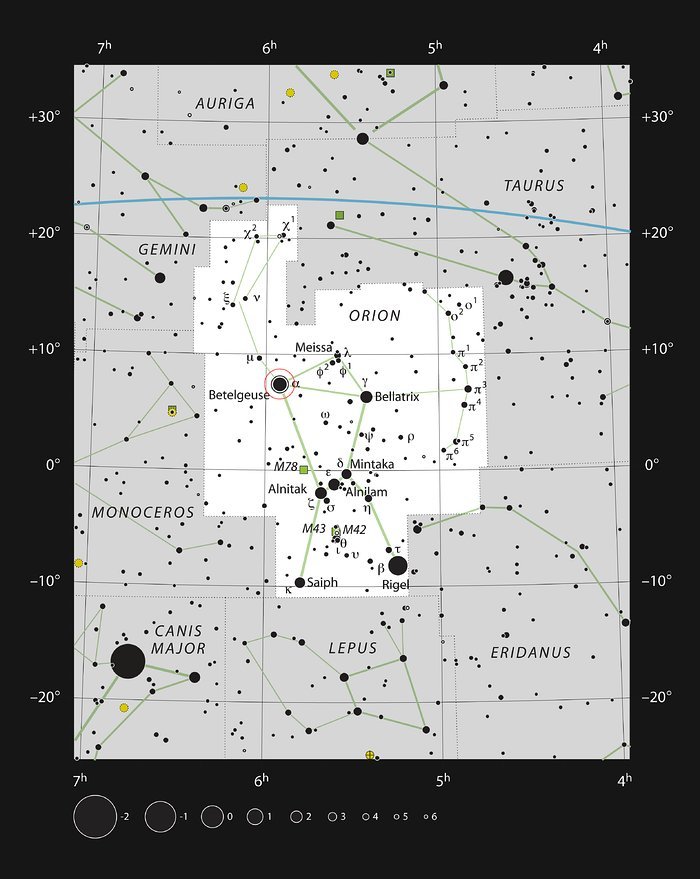
Astronomers have recently unveiled compelling evidence indicating that Betelgeuse, one of the most renowned stars in our night sky, is not a solitary entity. This discovery, facilitated by the European Southern Observatory's Very Large Telescope (VLT) in Chile, marks a significant milestone in stellar research. According to lead researcher Miguel Montargès from the Observatoire de Paris, this finding signals the end of a century-long quest to determine whether Betelgeuse has a companion star. Montargès expressed his excitement, saying, "I jumped from my chair when I saw the processed images." The evidence points towards a companion star, provisionally labeled Betelgeuse B, which is now believed to be orbiting the massive red supergiant.
Unraveling the Mystery of Betelgeuse
The quest to understand Betelgeuse's peculiar brightness fluctuations has puzzled astronomers for decades. Initially, scientists suggested that the variations could be attributed to a companion star, a hypothesis that dates back nearly a century. Despite numerous attempts to find this elusive star, previous efforts yielded no conclusive results. However, in 2024, a pair of studies hinted that the companion would be at its furthest point from Betelgeuse by December of that year, potentially making it visible for the first time. This prediction set the stage for Montargès and his team to conduct observations using the VLT, which led to their groundbreaking discovery.
How Astronomers Captured the Companion Star
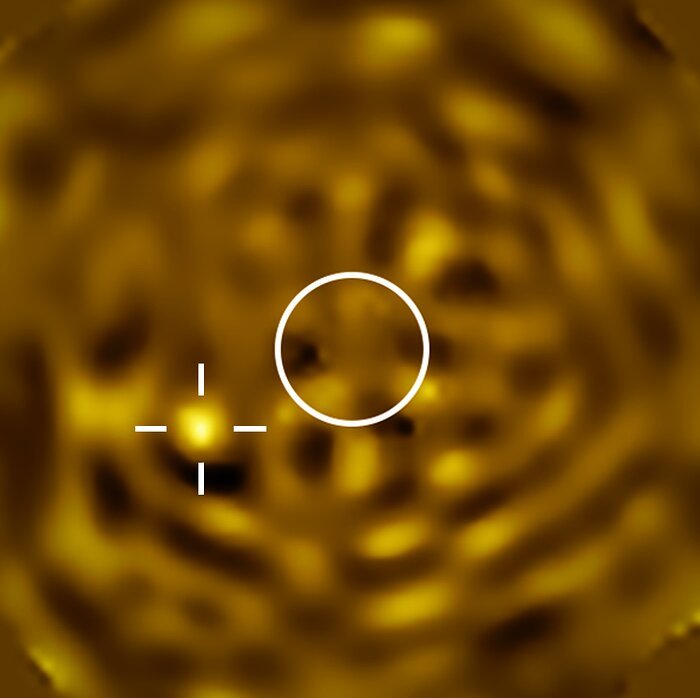
The team utilized the SPHERE instrument on the VLT, known for its exceptional imaging capabilities, particularly in detecting exoplanets. This advanced technology allowed them to directly capture light emitted by Betelgeuse B, revealing its existence more clearly than ever before. Initially thought to be similar in mass to the Sun, recent observations suggest that Betelgeuse B might actually have two to three times the Sun's mass. Montargès noted, "These are among the best moments in science: seeing something new, unexpected." The clear images obtained have provided the strongest evidence to date for the companion's existence.
What This Means for Betelgeuse's Future
The implications of discovering Betelgeuse B are profound. Not only does this find clarify the mechanisms behind Betelgeuse's brightness changes, but it also raises questions about how this companion star might influence the supergiant's eventual supernova explosion. Montargès emphasizes that further observations are needed to confirm the companion's orbit and its impact on Betelgeuse's life cycle. As he remarked, "The question is truly opened whether this companion is going to have an impact on the evolution of the red supergiant." This ongoing investigation promises exciting developments in our understanding of stellar dynamics.
Looking Ahead
As astronomers prepare for future observations, they aim to gather more data that will help confirm the findings. The team plans to observe Betelgeuse B again in one year when it will be on the opposite side of the star. This next phase of study will be crucial to substantiate the existence of the companion star and to explore its characteristics further. The excitement surrounding this discovery underscores the dynamic nature of astronomical research and its ability to challenge long-standing views. Montargès's team has opened a new chapter in the study of Betelgeuse, one that could reshape our understanding of massive stars and their environments.