
NASA has taken an exciting step forward with the selection of a mission concept designed to dive deep into the complex relationship between space weather and Earth’s atmosphere. This mission, known as DAPHNE (Dynamic Atmosphere-Ionosphere Explorer), aims to enhance our understanding of how variations in the lower atmosphere affect the upper atmosphere, where space weather phenomena occur. This knowledge is crucial for predicting impacts on vital technologies like GPS systems and satellites orbiting in low Earth orbit, as well as for safeguarding astronauts venturing into space.
The DAPHNE Mission Overview
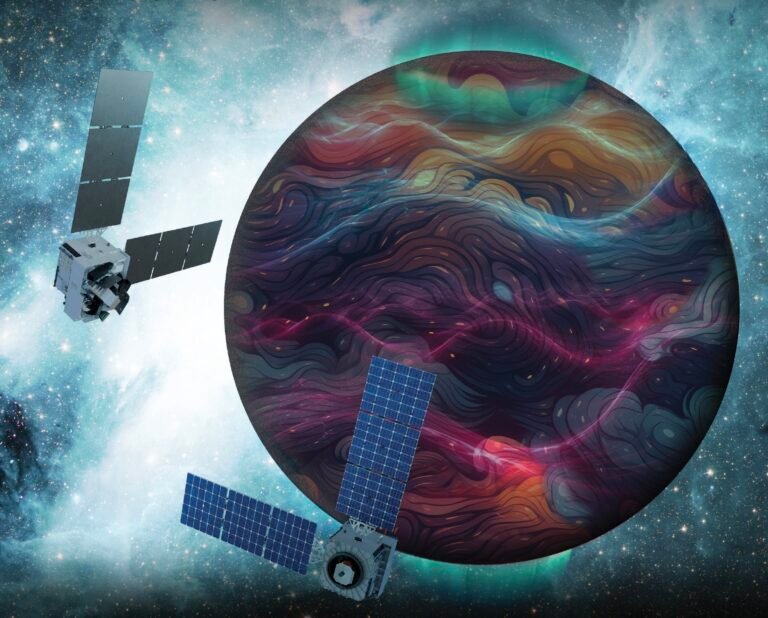
DAPHNE will enter Phase B of its development, focusing on detailed planning and design for both the mission and flight operations. The mission will feature two identical satellites that will work in tandem to gather data. By studying the interactions between the lower and upper atmospheres, DAPHNE will unveil how solar activities and atmospheric changes contribute to space weather phenomena. These insights are not just academic; they have real-world implications for our daily lives, especially as we rely increasingly on technology influenced by space weather.
Advancing Space Weather Predictions
Nicky Fox, the associate administrator of NASA's Science Mission Directorate, emphasizes the importance of this mission in positioning the United States as a leader in space weather preparedness. As astronauts prepare for missions beyond Earth’s protective magnetic field—such as trips to the Moon and Mars—DAPHNE will join a fleet of NASA science missions that provide critical data for mission planners. This data will help predict and mitigate the effects of space weather, ensuring the safety and success of future explorations.
Understanding the Atmosphere's Dynamics
The DAPHNE mission is designed with a low-risk, high-return approach, which means it aims to yield significant scientific insights without excessive risk. The mission will conduct coordinated measurements of neutral winds, temperature, and atmospheric composition in the thermosphere, a region of the atmosphere where transitions occur from neutral air to ionized plasma. This area is in constant flux, influenced by solar activity and changes occurring in the lower atmosphere. By understanding these dynamics, scientists can better grasp how space weather impacts both our planet and activities in space.
Future Steps for DAPHNE
In 2027, the DAPHNE mission will undergo a critical confirmation review, which will evaluate its progress and funding status. If everything goes according to plan, the mission is expected to launch no earlier than 2029. The estimated cost for the mission, excluding launch expenses, is projected to be around $250 million based on 2023 fiscal year dollars. This investment reflects the commitment to advancing our understanding of space weather and improving predictive capabilities.