
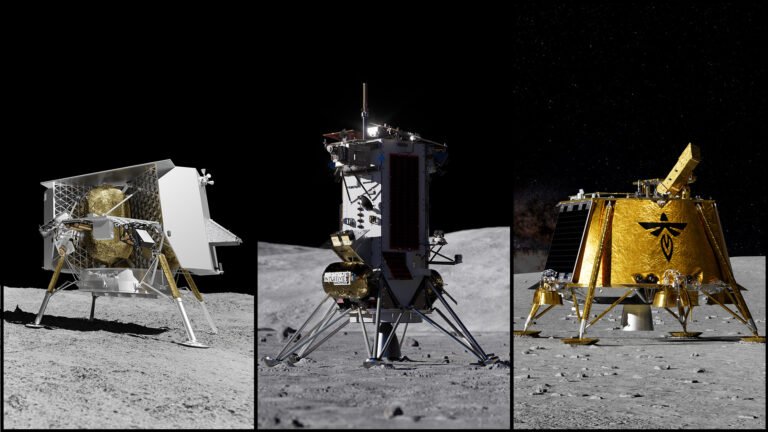
On June 30, 2026, NASA announced exciting developments in its Moon Base Program, selecting three companies to carry out four new missions to the lunar surface by late 2028. This ambitious initiative aims to establish the first human outpost on the Moon, marking a significant step in humanity's exploration of space. The selected companies—Astrobotic, Firefly Aerospace, and Intuitive Machines—will deliver various scientific instruments and payloads as part of the agency's ongoing efforts to create a long-term presence on our nearest celestial neighbor.
Significant Investments in Lunar Exploration
The total funding for these new missions is nearly $600 million, underscoring NASA's commitment to accelerating lunar exploration. Lori Glaze, associate administrator for the Human Spaceflight Mission Directorate, emphasized that these collaborations with commercial partners are essential for gaining the skills necessary for thriving on the Moon. Astrobotic has been awarded $297.9 million for two missions, while Firefly Aerospace and Intuitive Machines received $144.2 million and $148.3 million respectively for their individual missions, all utilizing enhanced lander designs that have previously flown.
Building a Lunar Proving Ground
According to Ryan Stephan, NASA's acting director of cargo landers for the Moon Base, these missions will serve as a proving ground for lunar operations. The strategy is to increase the frequency of lunar missions, which will allow NASA to learn quickly and refine their approaches to future explorations. With a total of 17 lunar deliveries planned across various providers, this initiative opens up new avenues for American industry to engage in lunar activities.
Introducing PROMISE Rover
One of the exciting prospects in the pipeline is the PROMISE rover, which stands for Polar Rover for Observation, Mapping, and In-Situ Exploration. This hybrid vehicle draws inspiration from NASA's successful Mars rovers, Perseverance and Curiosity. It aims to explore and map the lunar surface, identify valuable resources, and support further scientific endeavors. NASA experts are working diligently to define the rover's capabilities and potential contributions to lunar exploration.
Future Proposals and Technology Demonstrations
In the coming months, NASA plans to invite proposals for additional lunar landers to carry out various demonstrations, including power and avionics technology tests as well as other scientific missions. The agency is also seeking to establish a lunar communication and navigation relay constellation, which would significantly enhance communication between the Moon Base and Earth. These efforts are critical to laying the groundwork for sustainable human activity on the Moon.