
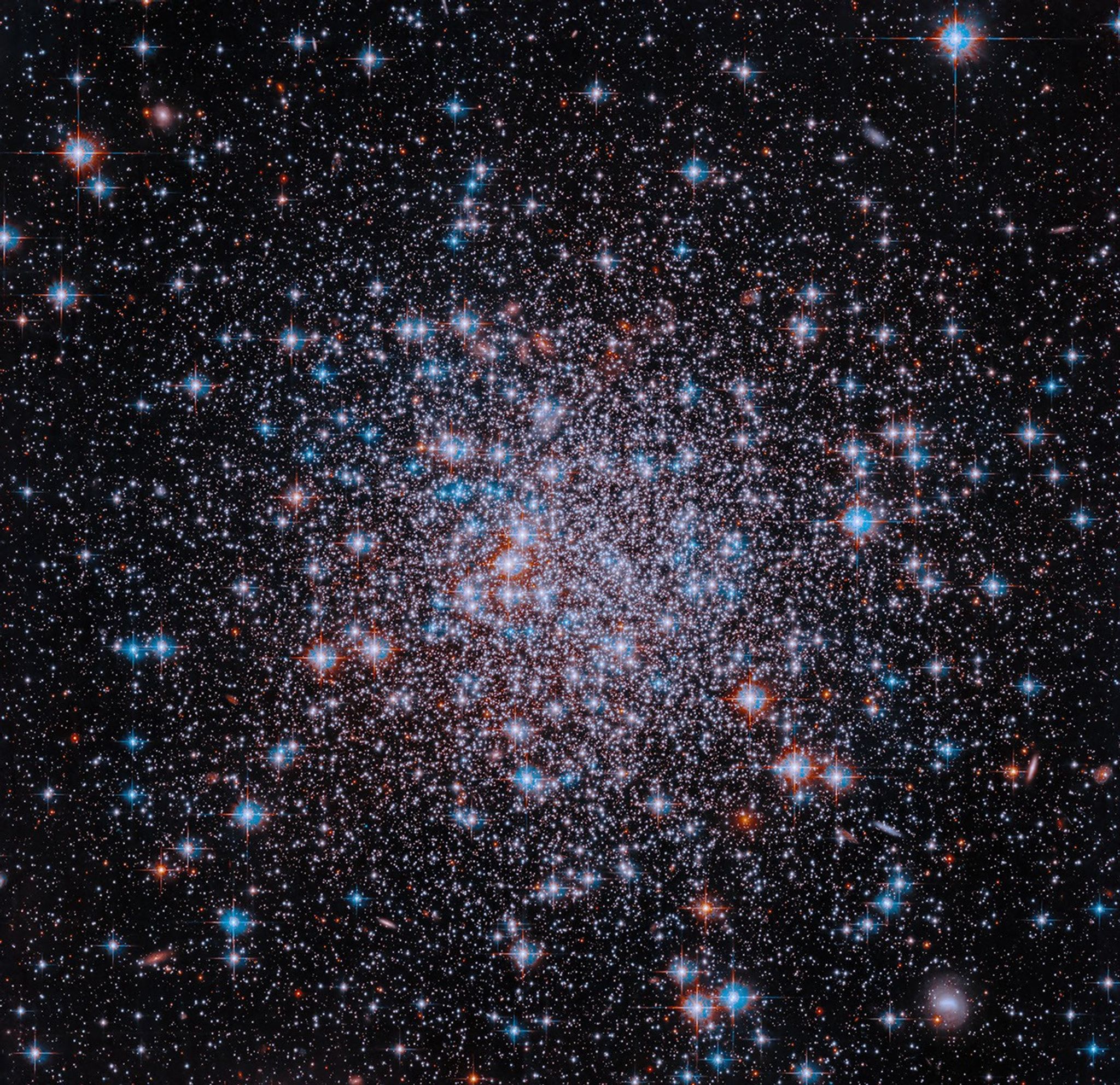
NASA's Hubble Space Telescope has unveiled a breathtaking image that sparkles with red, white, and blue stars, reminiscent of a celebratory sparkler against the night sky. This stunning visual was released in honor of the United States' 250th anniversary, highlighting the nation's ongoing legacy of exploration and discovery in the cosmos. Hubble's latest capture showcases the globular cluster NGC 6426, a spherical grouping of stars that resides in the outer halo of our Milky Way galaxy.
Understanding Globular Clusters
Globular clusters like NGC 6426 are fascinating cosmic formations, consisting of densely packed stars that are held together by their gravitational pull. There are about 150 of these clusters known within our galaxy, and they are believed to originate from a single collapsing cloud of gas. Consequently, the stars within these clusters typically share similar ages. NGC 6426 is particularly remarkable; at around 13 billion years old, it is one of the oldest globular clusters in the Milky Way, nearly as old as the universe itself, which is estimated to be about 13.7 billion years.
The Colorful Composition of Stars
In the captivating Hubble image, stars are depicted in various colors, with blue representing shorter wavelengths of visible light and red indicating longer wavelengths, including some near-infrared light. The colors are not just visually stunning; they also provide important clues about the temperatures of the stars. Generally, blue stars are hotter than their red counterparts. This color coding helps astronomers understand the stellar populations within NGC 6426, revealing that many of these ancient stars are relatively cooler and less luminous.
The Elements of Star Formation
The stars in NGC 6426 exhibit low metallicity, indicating they contain fewer elements heavier than hydrogen and helium. This characteristic mirrors the conditions found in the early universe, where matter was primarily composed of these two lighter elements. As the universe evolved, heavier elements began to form through nuclear fusion inside massive stars. These stars eventually exploded as supernovae, scattering heavier elements across the universe, which would later contribute to the formation of new stars and planets.
Ongoing Research and Discoveries
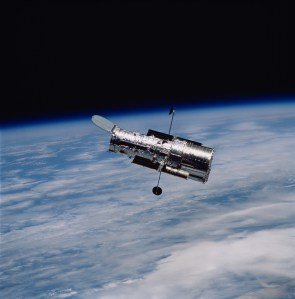
Hubble's observations of NGC 6426 are part of a broader study aimed at investigating the ages of globular clusters in our galaxy’s halo. This research is crucial for understanding how these star groups formed and evolved throughout cosmic history. Over its three decades of operation, the Hubble Space Telescope has revolutionized our understanding of the universe, revealing new insights about star formation, galaxy evolution, and the fundamental nature of cosmic phenomena. Hubble's findings are often complemented by observations from other NASA missions, such as the James Webb Space Telescope and the upcoming Nancy Grace Roman Space Telescope.