
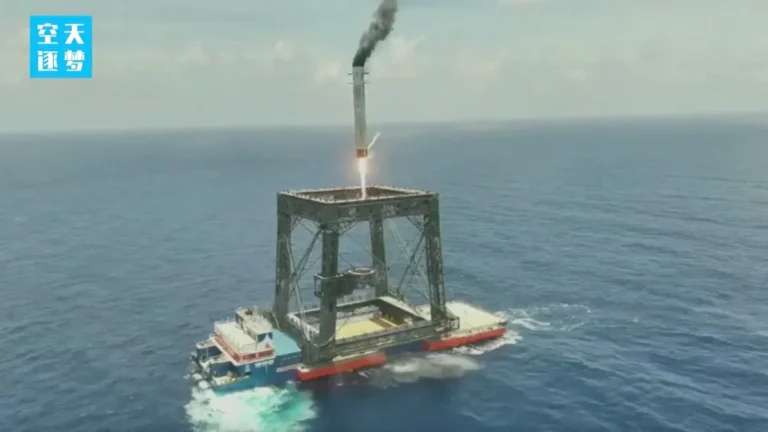
In a groundbreaking achievement for China's space program, the Long March-10B rocket made its maiden flight and successfully recovered its first stage from the sea. This remarkable event took place off the coast of Hainan, where the rocket was launched from the Hainan Commercial Space Launch Site. The recovery not only marks a pivotal moment for Chinese space exploration but also highlights the country's advancements in developing reusable rocket technology.
A New Era for Reusable Rockets
The recovery of the Long March-10B’s first stage is a significant milestone in the evolution of reusable launch systems. Unlike traditional expendable rockets, which are discarded after a single use, reusable rockets are designed to return safely to Earth, allowing for multiple flights. This technology not only reduces the cost of space exploration but also enhances the sustainability of launching payloads into orbit. China's achievement mirrors similar endeavors by companies like SpaceX, which has pioneered reusable rocket launches in recent years.
The Maiden Flight Experience
The Long March-10B's launch was a spectacle that drew attention from space enthusiasts and experts alike. Witnessing the powerful ascent of the rocket, observers were captivated by its impressive capabilities. The rocket's design incorporates advanced engineering features aimed at improving payload capacity and optimizing performance. After completing its mission, the first stage descended into the ocean, where it was retrieved using a maritime cable net—a method that demonstrates innovative recovery techniques.
Significance of the Recovery
The successful recovery of the Long March-10B's booster is not just a technical feat; it represents China's commitment to being a key player in the global space race. With nations and private companies racing to develop more efficient space travel technologies, this achievement positions China as a formidable contender in reusable rocket technology. Such advancements are crucial as countries look to establish more sustainable practices in space exploration, particularly with ambitious plans for lunar and Martian missions.
Looking Ahead: Future Missions
As China continues to push the boundaries of space exploration, the Long March-10B marks just the beginning of its reusable rocket endeavors. Future missions will likely focus on refining recovery techniques, enhancing rocket designs, and increasing payload capacities. The success of the Long March-10B could pave the way for more frequent and affordable space missions, ultimately contributing to international collaborations in space research and exploration. With each successful flight, China is building a legacy that will inspire future generations of scientists and engineers.