
Imagine a substance that makes up nearly a third of the universe yet remains utterly invisible to our eyes. This is dark matter, a mysterious entity that surrounds us and plays a crucial role in the cosmos. For nearly a century, scientists have been piecing together the puzzle of what dark matter is and how it shapes the universe.
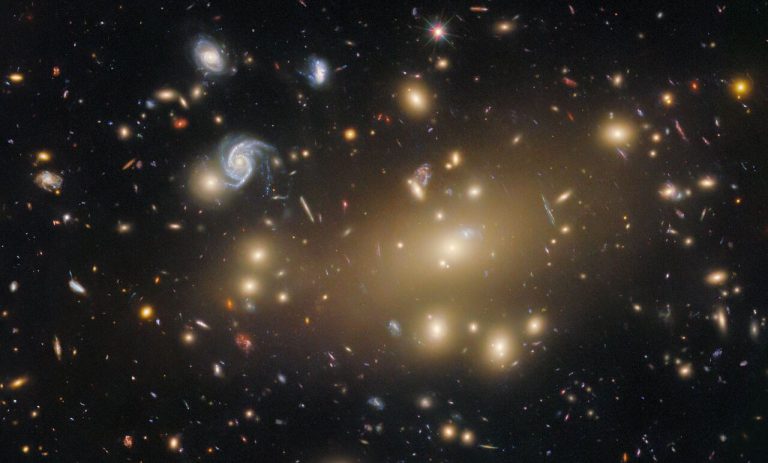
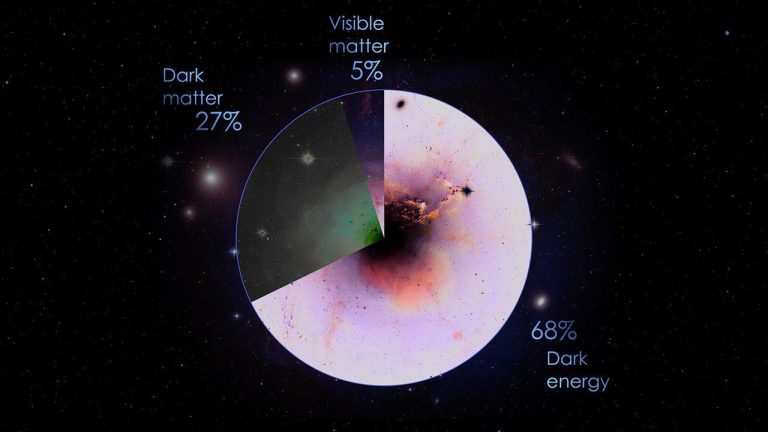
Dark matter is not just a theoretical concept; it constitutes about 27% of the universe, while ordinary matter—everything we can see and touch—makes up only about 5%. The remaining components are thought to be dark energy, which poses its own set of questions and mysteries. Dark matter is believed to influence the formation and structure of galaxies, acting as a framework that organizes cosmic objects on a grand scale.
The Nature of Dark Matter
Ordinary matter interacts with light in various ways; it can absorb, reflect, or emit light, allowing us to see it. Dark matter, on the other hand, does not interact with the electromagnetic spectrum at all, which is why it remains hidden from our direct observations. However, it does exert gravitational influence, which allows scientists to infer its presence and study its effects on visible matter throughout the universe.
A Historical Quest
The quest to understand dark matter began in earnest in the 1930s when astronomers first noticed peculiarities in the motion of galaxies. Swiss astronomer Fritz Zwicky was among the first to highlight an apparent lack of mass in the Coma Cluster of galaxies. He observed that the galaxies were moving too swiftly for the visible matter present, leading him to propose the existence of an unseen mass—what he called "dunkle Materie," or dark matter.
Rubin's Revelations
Fast forward to the 1970s, when American astronomer Vera Rubin provided pivotal evidence for the existence of dark matter. By studying the stars at the edges of spiral galaxies, she discovered that these stars were moving at speeds that could only be explained by the presence of a significant amount of unseen mass. Her findings garnered widespread acceptance among scientists and solidified dark matter's role in the cosmos.
Gravitational Lensing: A Window to the Invisible
Though dark matter does not emit light, it has a fascinating effect on light itself. This phenomenon, known as gravitational lensing, occurs when dark matter's gravitational field bends light from distant galaxies. By observing these distortions, scientists can glean information about the distribution of dark matter in the universe, providing crucial insights into its properties and behavior.
Direct Evidence from the Bullet Cluster
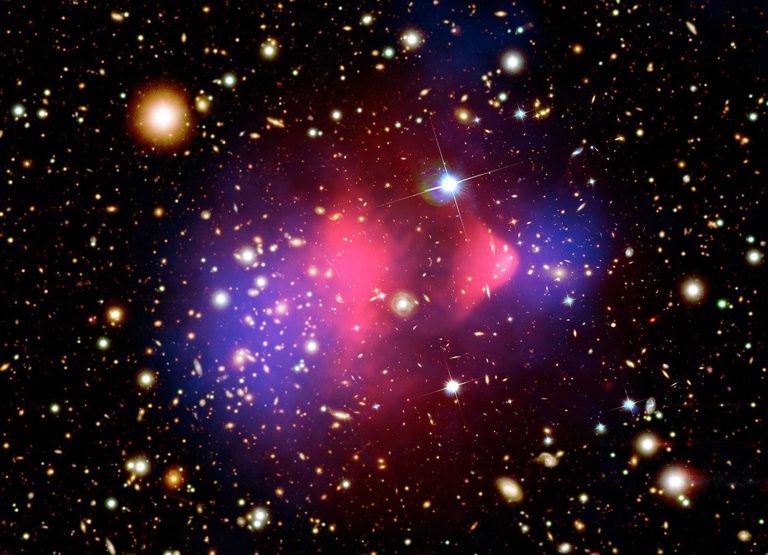
One of the most compelling pieces of evidence for dark matter came from observing the Bullet Cluster, a massive collision of two galaxy clusters located about 3.8 billion light-years away. This event showed hot gas interacting during the collision, with X-ray observations from NASA's Chandra X-ray Observatory revealing the presence of visible matter, while gravitational lensing data from the Hubble Space Telescope indicated a separate distribution of mass—likely dark matter. This striking contrast provided a clear visual of dark matter's presence in the universe.
Mapping Dark Matter's Distribution
With growing evidence supporting the existence of dark matter, scientists are now focused on mapping its distribution across the universe. Understanding where dark matter is located will shed light on fundamental cosmic questions about the universe's organization and its evolution over time. Future missions, such as NASA’s Nancy Grace Roman Space Telescope, aim to create detailed maps of dark matter, enhancing our knowledge of this elusive substance.
The Temperature of Dark Matter
Interestingly, dark matter must have a temperature since it has mass. Scientists have proposed two main types: cold dark matter, which consists of slow-moving particles, and warm or hot dark matter, made up of faster-moving particles. Simulations have shown that a universe governed by cold dark matter aligns more closely with our observations, suggesting that this is the most likely form of dark matter.
The Candidates for Dark Matter
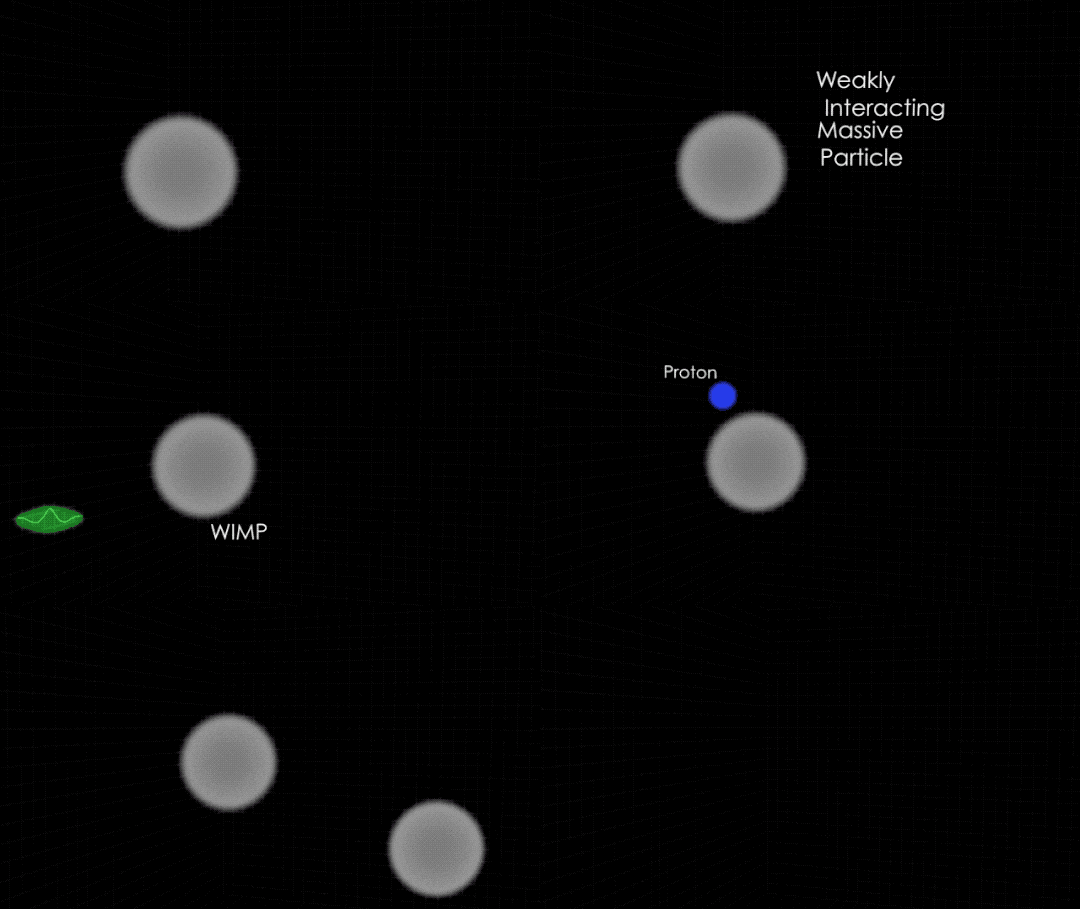
Currently, scientists are exploring various candidates that could make up dark matter. While no definitive evidence has been found to confirm any particular type, researchers continue to investigate the possibility that dark matter may consist of more than one type of particle. The search for answers is ongoing, and new theories may emerge as technology and our understanding of physics evolve.
Clearing Up Misconceptions
Dark matter can be a confusing term. It does not refer to a dark color; instead, it is termed 'dark' because it is invisible to us. Additionally, it is essential to distinguish dark matter from dark energy. While both are cosmic mysteries, dark matter is the unseen mass that helps bind galaxies together, whereas dark energy is a force causing the universe to expand at an accelerating rate. These fundamental differences highlight the complexity of the universe's structure.