
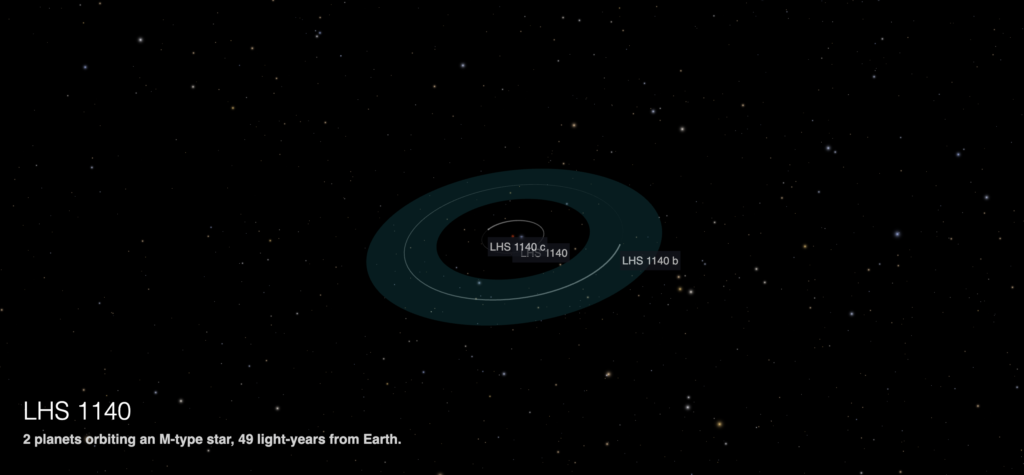
Astronomers have made a remarkable discovery: the first atmosphere detected around an Earth-like exoplanet, LHS 1140b. Located 48 light-years away from Earth, this rocky planet orbits a red dwarf star, which is smaller and cooler than our Sun. The findings, published in the journal Science, provide compelling evidence that worlds with conditions similar to Earth may exist beyond our solar system. This breakthrough could be a significant step toward answering one of humanity's oldest questions: Are we alone in the universe?
What led to this discovery?
The discovery of LHS 1140b's atmosphere is a culmination of years of astronomical research and advancements in detection technology. Researchers have identified over 6,000 exoplanets to date, but LHS 1140b stands out because it resides in the 'Goldilocks zone'—the region around a star where conditions might be just right for liquid water to exist. While many planets have been found in this zone, few are rocky and Earth-like, making LHS 1140b an exciting candidate for further study. The lead author of the study, Dr. Collin Cherubim from Harvard University, emphasized the significance of this finding, stating, 'This is the first time anyone has found an atmosphere on a rocky planet in the habitable zone of another star.'
How do astronomers know there's an atmosphere?
The detection of LHS 1140b's atmosphere was made possible through advanced spectroscopy techniques, which allow scientists to analyze the light passing through a planet's atmosphere. Researchers identified helium as the primary gas present, likely found in the upper atmosphere. While helium itself isn't conducive to life, its detection suggests that other, potentially life-sustaining gases may exist deeper within the atmosphere. Dr. David Charbonneau, also from Harvard, noted the importance of this finding, stating, 'The important thing was the discovery of an Earth-like planet outside of our solar system with an atmosphere.'
What else is out there?
LHS 1140b isn't the only intriguing world in the search for extraterrestrial life. For instance, K2-18b, a sub-Neptune planet, previously garnered attention due to signs of dimethyl sulfide, a gas associated with marine life on Earth. However, a NASA-led reanalysis in 2025 revealed that the signal was too weak to confirm biological origins. Meanwhile, the TRAPPIST-1 system, home to seven rocky planets, continues to be a focal point for scientists. Although NASA's James Webb Space Telescope ruled out an Earth-like atmosphere on TRAPPIST-1d, the data for TRAPPIST-1e remains inconclusive, leaving the door open for future discoveries.
What's next for LHS 1140b?
The next steps involve more detailed observations of LHS 1140b to explore its atmospheric composition further. Scientists are keen to identify any additional gases that might hint at the planet's potential to support life. As technology improves, the hope is to gather more data that could provide insights into the conditions on this distant world. The excitement surrounding LHS 1140b reflects a broader interest in the search for life beyond Earth, as researchers continue to explore the cosmos for signs of our cosmic neighbors.