
As June unfolds, the night sky will be alive with celestial wonders, inviting stargazers to step outside after sunset. This month, a stunning planetary conjunction, the Moon's dance with Venus, and the arrival of summer create a vibrant backdrop for exploration. Whether you're a seasoned astronomer or a casual skywatcher, there's plenty to delight in.
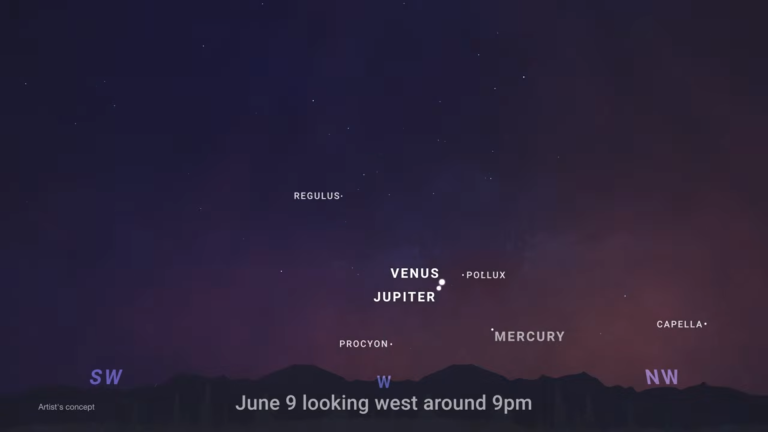
At the beginning of the month, keep your eyes peeled to the west shortly after the sun dips below the horizon. Venus and Jupiter, two of the brightest planets visible from Earth, will appear to be close neighbors in the sky around June 9th. This fascinating event, known as a planetary conjunction, is when two celestial bodies seem to align from our perspective, although they remain millions of miles apart in the vastness of space.
Mercury Joins the Planetary Parade
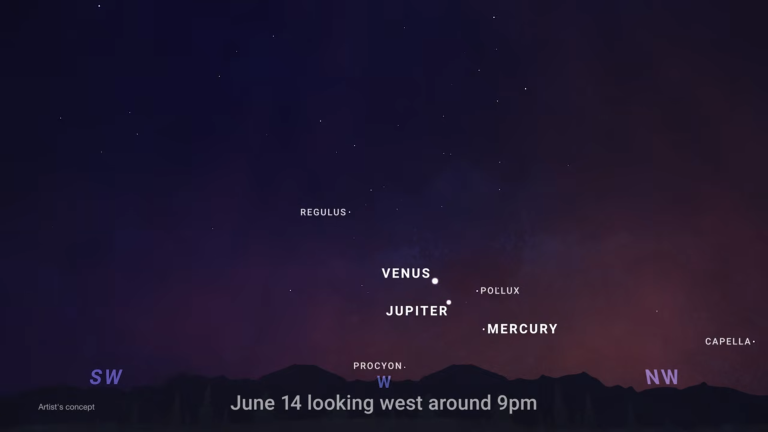
As the month progresses, from June 11th to June 15th, the planet Mercury will make a spectacular appearance alongside Venus and Jupiter, creating a delightful mini parade of planets. This trio will be low in the western sky, offering a stunning view for those with a clear sightline. The planets orbit the sun along a path called the ecliptic, which is why they can sometimes gather so closely in our sky.
A Lunar Occultation of Venus
On June 17th, an intriguing event will take place: the Moon will pass directly in front of Venus, a phenomenon referred to as a lunar occultation. For lucky viewers along the right path, this will create the magical effect of Venus seemingly vanishing behind the Moon, before re-emerging shortly after. This captivating spectacle will be observable from parts of the United States, Canada, Brazil, and Venezuela. However, it's important to note that many people may only see the Moon and Venus closely paired during the day, which adds an extra challenge for skywatchers.
Safety First When Observing
If you're planning to witness the lunar occultation, it's crucial to prioritize safety. Do not look at or point any optical devices, such as binoculars or telescopes, near the sun without proper solar filters. Observing the sun through these devices can lead to severe eye damage, so make sure to take necessary precautions.
The Summer Solstice
June also ushers in the summer solstice, which marks the official start of summer in the Northern Hemisphere. This year, the solstice occurs on June 21st at 1:24 a.m. Pacific Time, bringing with it the longest days and shortest nights of the year. It's a time when the sun reaches its highest point in the sky and shines down on us for the longest duration.
Exploring the Night Sky
Interestingly, the longest day of the year does not always coincide with the earliest sunrise or latest sunset. For example, in Los Angeles, the earliest sunrise occurs before the solstice, and the latest sunset follows it. This is a fascinating aspect of our planet's tilt and orbit that can confuse even the most seasoned stargazers.
Summer Stargazing Targets
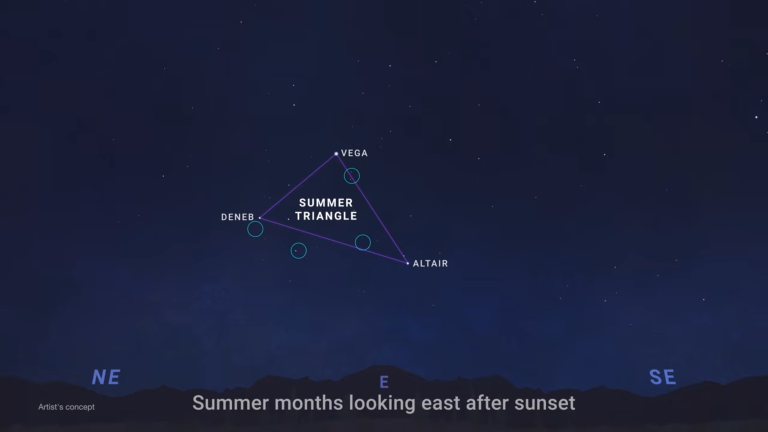
As night falls and the summer sky darkens, it's time to turn your gaze to some of the season's best astronomical targets. Look for the Summer Triangle, a prominent asterism formed by the three bright stars: Vega, Altair, and Deneb. This celestial formation serves as a guide to a treasure trove of deep-sky objects, including the Dumbbell Nebula, the Ring Nebula, the North America Nebula, and the Veil Nebula.
Discovering Deep-Sky Wonders
While these deep-sky objects may not shine as brightly as planets, with the aid of telescopes or long-exposure photography, they unveil breathtaking views of glowing gases, dying stars, and stellar nurseries within our galaxy. The Dumbbell Nebula, also known as Messier 27, holds the distinction of being the first planetary nebula ever discovered, making it a must-see for astronomy enthusiasts.
Moon Phases for June
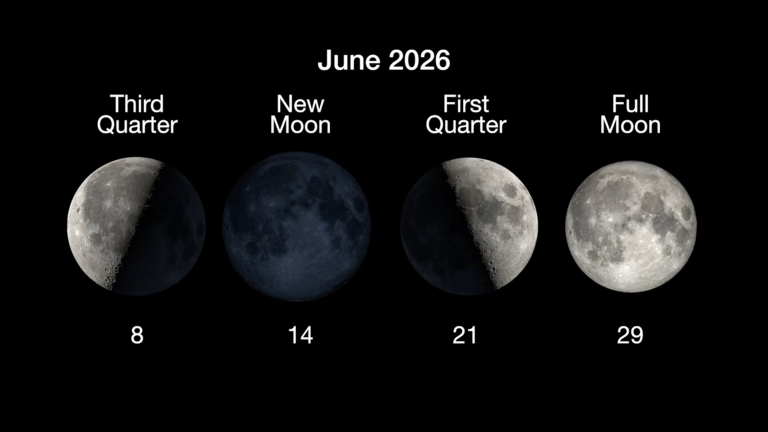
Throughout June, the Moon will go through its various phases, providing additional opportunities for skywatching. Whether you're observing the planets, tracking the Moon's movements, or exploring deep-sky treasures, the month promises to be full of excitement and discovery. Stay informed about all NASA missions exploring the solar system and beyond by visiting science.nasa.gov.
Get Ready for a Celestial Adventure
So, gather your binoculars, grab a friend, and prepare for an unforgettable month of stargazing. With the planets aligning, exciting lunar events, and the warm embrace of summer nights, June 2026 is set to be a remarkable time for anyone looking to explore the wonders of our universe.