
Mercury is the smallest planet in our solar system and the nearest planet to the Sun. Despite its tiny size, this rocky world is one of the most fascinating places in our cosmic neighborhood. Mercury races around the Sun faster than any other planet, completing one orbit in only 88 Earth days.
A Small but Remarkable World
Mercury is only slightly larger than Earth's Moon. If Earth were the size of a basketball, Mercury would be about the size of a tennis ball. Even though it is the smallest planet, Mercury is incredibly dense because it has a massive iron-rich core that makes up much of its interior.
The Fastest Planet in the Solar System
Mercury travels around the Sun at an average speed of nearly 170,000 kilometers (105,000 miles) per hour. This incredible speed earned the planet its name from Mercury, the swift messenger god of ancient Roman mythology.
Because Mercury is so close to the Sun, its year is surprisingly short. A single year on Mercury lasts only 88 Earth days.
A World of Extreme Temperatures
Mercury experiences some of the most dramatic temperature swings in the solar system. During the daytime, temperatures can soar to about 430°C (800°F), hot enough to melt certain metals. At night, temperatures plunge to around -180°C (-290°F).
These extreme changes occur because Mercury has almost no atmosphere to trap heat. Instead of a thick atmosphere like Earth's, Mercury has a very thin exosphere made up of atoms blasted from its surface by solar radiation and tiny meteor impacts.
A Surface Covered in Craters
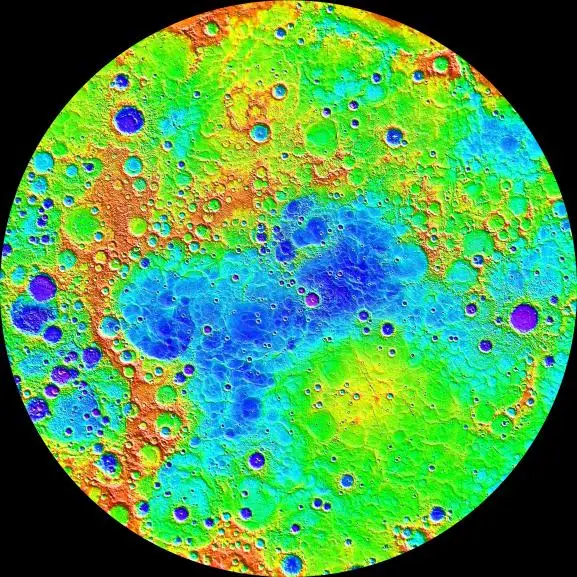
Mercury's rocky surface resembles Earth's Moon. It is covered with impact craters formed by billions of years of collisions with asteroids and comets. One of its most famous features is the Caloris Basin, one of the largest impact structures in the solar system.The planet also has long cliffs and ridges created as Mercury slowly cooled and shrank over billions of years.
Water Ice on a Scorching Planet
Although Mercury is extremely hot, scientists have discovered water ice hidden inside permanently shadowed craters near its poles. These craters never receive direct sunlight, allowing ice to survive in temperatures that remain incredibly cold.This surprising discovery shows that even the hottest regions of our solar system can contain frozen water under the right conditions.
Does Mercury Have Moons or Rings?
Mercury has no moons and no ring system. It is one of only two planets in our solar system that do not have natural satellites.
Exploring Mercury
Because Mercury stays so close to the Sun, it is difficult to observe from Earth. Only a few robotic spacecraft have visited this mysterious world. NASA's Mariner 10 and MESSENGER missions revealed detailed images of its cratered surface, magnetic field, and unusual composition.Scientists continue to study Mercury because it provides important clues about how rocky planets form and evolve. By understanding Mercury, researchers can learn more about our own solar system and the many rocky worlds being discovered around other stars.
Quick Facts About Mercury
Position from the Sun: First planet
Planet Type: Rocky (Terrestrial) Planet
Length of a Year: 88 Earth days
Length of a Day: 59 Earth days
Moons: None
Rings: None
Surface Temperature: From about -180°C to 430°C
Special Feature: The fastest planet in the solar system and home to water ice in permanently shadowed polar craters.
Mercury may be small, but it is a world of extremes. From blazing daytime temperatures to frozen polar craters, this tiny planet continues to challenge our understanding of how planets form and survive in the harsh environment close to a star.