
NASA and Blue Origin have recently announced a significant collaboration to conduct hot fire testing for the New Glenn rocket. This testing will take place on the B-2 test stand at NASA's Stennis Space Center in Mississippi. The agreement underscores the agency's commitment to working with commercial partners as part of the Artemis program, which aims to return humans to the Moon by 2027. This partnership is not just about testing; it represents a pivotal step toward advancing America's capabilities in space exploration.
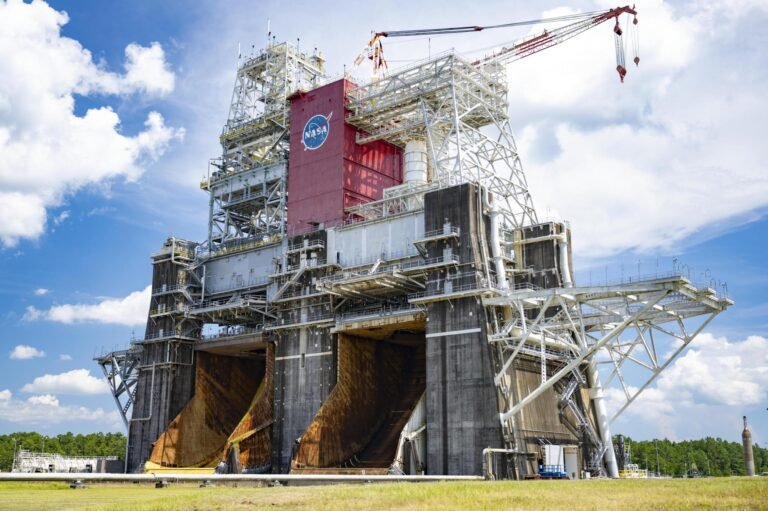
The B-2 test stand has a rich history, having been used for critical rocket tests since the Apollo era. It was originally constructed to test the Saturn V rocket stages, which were instrumental in landing humans on the Moon. The facility has since evolved, accommodating modern testing needs, including the recent Green Run tests for NASA's Space Launch System (SLS). This historical context adds a layer of significance to the current testing of the New Glenn rocket.
What led to this collaboration?
The partnership between NASA and Blue Origin is part of a broader strategy to enhance the U.S. presence in space. With the Artemis missions on the horizon, collaboration with commercial entities is essential for achieving ambitious goals. NASA Administrator Jared Isaacman emphasized that winning the new space race requires rapid progress and strong partnerships with the commercial sector. This agreement reflects a mutual commitment to advancing rocket propulsion technology and ensuring the United States remains a leader in space exploration.
How does the New Glenn rocket work?
The New Glenn rocket is designed to be a heavy-lift vehicle capable of launching payloads into low Earth orbit and beyond. Its second stage is powered by two BE-3 engines, which utilize liquid oxygen and liquid hydrogen propellants. Each engine generates an impressive 200,000 pounds of thrust in a vacuum, making it a powerful option for future lunar missions. This rocket is named in honor of John Glenn, the first American to orbit Earth, linking its mission to a legacy of exploration.
What are the goals of the Artemis missions?
The Artemis program aims to establish a sustainable human presence on the Moon by 2028. This includes building a Moon Base near the lunar South Pole, which will serve as a launching point for future missions to Mars. Artemis III will involve a complex series of launches, including testing rendezvous and docking capabilities with commercial human landing systems from both Blue Origin and SpaceX. The collaboration between NASA and Blue Origin is crucial for achieving these ambitious objectives.
What will happen during the hot fire tests?
What scientists hope to learn from the tests?
The primary goal of the hot fire tests is to ensure that the New Glenn rocket can meet the rigorous demands of lunar missions. By testing the rocket's second stage, scientists aim to gather data on engine performance and reliability. This information will be essential for refining the rocket's design and ensuring its readiness for upcoming Artemis missions. Successful testing will bolster confidence in the rocket's capabilities as a launch vehicle for lunar exploration.
What's next for Blue Origin and NASA?
Following the hot fire tests, Blue Origin will continue to develop its New Glenn rocket in preparation for future missions. The company has already been awarded contracts for robotic missions to the Moon, including launching the Blue Moon Mark 1 Endurance lander. This lander will deliver payloads to the lunar South Pole, demonstrating capabilities that will reduce risks for astronauts during Artemis IV and V missions. As these developments unfold, the collaboration between NASA and Blue Origin will play a crucial role in shaping the future of lunar exploration.
Bottom line:
NASA's partnership with Blue Origin for New Glenn rocket testing marks a significant step toward achieving the goals of the Artemis program. By leveraging the capabilities of the B-2 test stand, this collaboration aims to enhance America's leadership in space exploration and prepare for future missions to the Moon and beyond.