
The Moon is Earth's only natural satellite and the brightest object in our night sky after the Sun. For billions of years, it has shaped our planet's tides, influenced cultures around the world, and inspired countless stories, discoveries, and space missions. Although it may seem close, the Moon is a fascinating world with its own unique history and landscapes.
How the Moon Formed
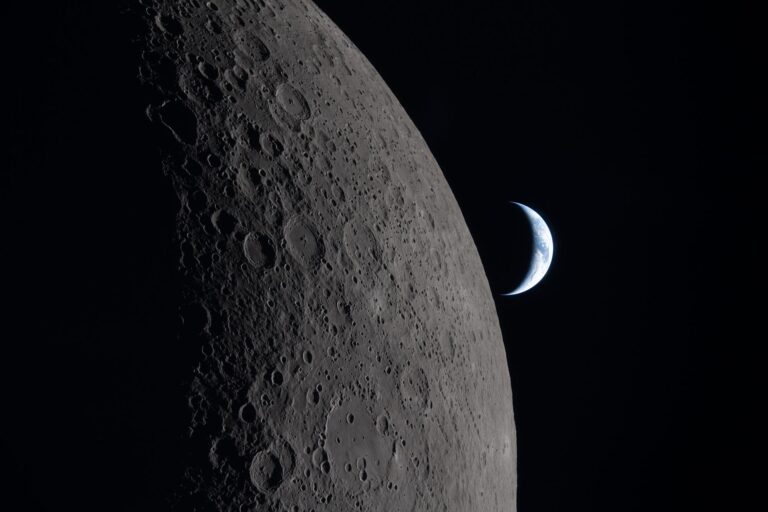
Scientists believe the Moon formed about 4.5 billion years ago when a Mars-sized object collided with the young Earth. The massive impact sent huge amounts of rock and debris into space, which eventually came together to form the Moon.
Since then, the Moon and Earth have remained gravitational partners, orbiting each other and evolving together over billions of years.
A Rocky World Covered in Craters
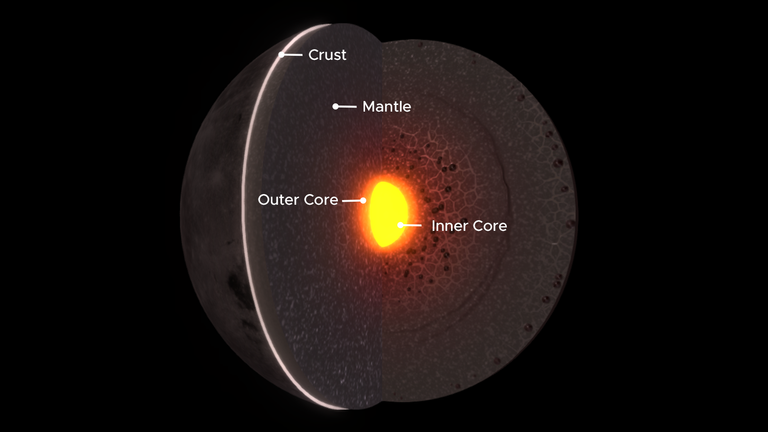
The Moon is a rocky body with a surface marked by mountains, valleys, and countless impact craters. Because it has almost no atmosphere, meteoroids can strike its surface without burning up, leaving visible scars that have remained for millions and even billions of years.
Large dark regions on the Moon, known as "maria," are ancient plains formed by volcanic activity long ago. The brighter areas are heavily cratered highlands that represent some of the oldest surfaces in our solar system.
Why the Moon Has Different Phases
The Moon does not produce its own light. Instead, it shines by reflecting sunlight. As the Moon orbits Earth, we see different portions of its sunlit side, creating the familiar phases of the Moon.
A complete cycle of phases, from one new moon to the next, takes about 29.5 Earth days.
The Moon Controls Earth's Tides
The Moon's gravity has a powerful effect on Earth. Its gravitational pull creates ocean tides by slightly stretching our planet and its bodies of water. These tides influence marine ecosystems, coastal environments, and even Earth's long-term rotation.
Without the Moon, life on Earth may have developed very differently.
Extreme Conditions on the Moon
The Moon has no significant atmosphere to regulate temperatures. As a result, conditions can be extremely harsh. Temperatures can soar to around 127°C (260°F) during the lunar day and plunge to about -173°C (-280°F) at night.
The lunar surface is also constantly exposed to radiation and micrometeorite impacts.
Water Ice on the Moon
For many years, scientists believed the Moon was completely dry. However, recent discoveries have revealed water ice hidden inside permanently shadowed craters near the lunar poles. Because these regions never receive direct sunlight, temperatures remain cold enough for ice to survive.
This water could become an important resource for future human exploration, potentially providing drinking water, oxygen, and even rocket fuel.
Human Exploration of the Moon
The Moon is the only world beyond Earth that humans have visited. During NASA's Apollo missions between 1969 and 1972, twelve astronauts walked on the lunar surface, conducted scientific experiments, and returned samples of lunar rocks to Earth.
These missions transformed our understanding of the Moon and provided valuable insights into the early history of our solar system.
Today, space agencies around the world are preparing for a new era of lunar exploration. Future missions aim to establish a long-term human presence on the Moon and use it as a stepping stone for missions to Mars and beyond.
Quick Facts About the Moon
Type: Natural Satellite of Earth
Age: About 4.5 billion years
Average Distance from Earth: Approximately 384,400 kilometers (238,855 miles)
Diameter: About 3,475 kilometers (2,159 miles)
Length of One Orbit Around Earth: About 27.3 days
Complete Phase Cycle: About 29.5 days
Atmosphere: Extremely thin exosphereSurface Features: Craters, mountains, valleys, and ancient volcanic plains
Special Feature: The only celestial body beyond Earth visited by humans
The Moon is far more than a beautiful object in our night sky. It is a world that has shaped Earth's history, guided human curiosity, and continues to play a central role in our journey into space. As new missions prepare to return astronauts to the lunar surface, the Moon remains one of the most exciting destinations for exploration and discovery.