Explore the Night Sky: Visible Planets in July 2026

July 7, 2026

July 2026 is set to be a spectacular month for stargazing, offering viewers a beautiful array of celestial events. As the summer nights provide clear skies, prepare to witness the moon, various planets, and brilliant stars lighting up the night. This guide will help you navigate the wonders of the night sky throughout the month. Make sure to mark your calendar for these exciting astronomical occurrences!
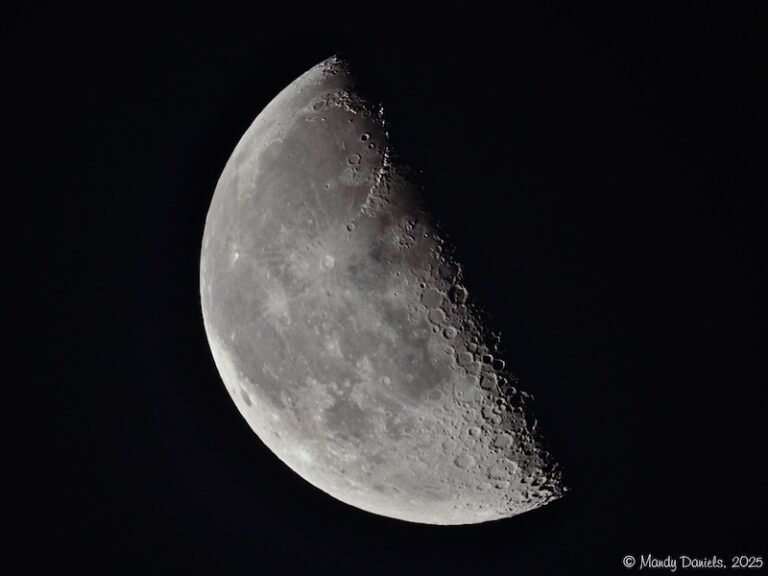
View at EarthSky Community Photos. | Mandy Daniels captured this image of the last quarter moon on September 14, 2025, in the UK. Thank you, Mandy! The moment of the 3rd quarter moon will fall at 19:29 UTC on July 7, 2026. That’s 2:29 p.m. Central Daylight Time in the Americas. And it’s 7:29 a.m. New Zealand Standard Time on July 8. It’ll rise after midnight your local time and set around noon. Look for it high in the sky before dawn.
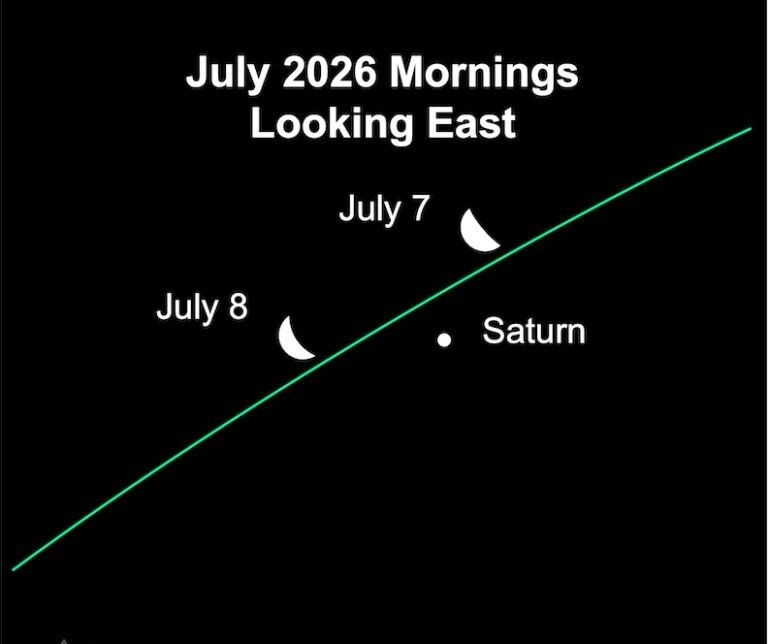
On the morning of July 8, the moon will shine near Saturn. They will rise after midnight, so you can catch them through dawn. Chart via EarthSky.
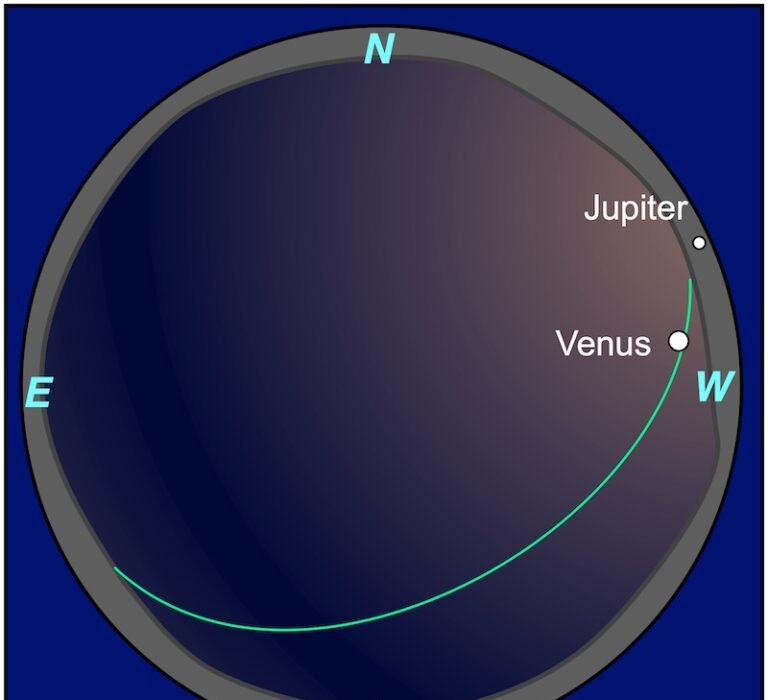
This all-sky chart shows bright Jupiter and Venus about 60 minutes after sunset, in early July. Each day, Venus will ascend higher as it races toward its greatest distance from the sun on August 14-15. Jupiter, on the other hand, is falling quickly below the sunset horizon in the evening twilight. It’ll be gone early in the month for mid-latitudes in the Northern Hemisphere, and by mid-month for tropical latitudes. It’ll be most directly behind the sun from Earth on July 29. And it’ll return – to the east before dawn this time – in September. Note that planets lie along the ecliptic, the path the sun travels in the daytime (the green line on our chart). Chart via EarthSky.

Stargazing Highlights of July

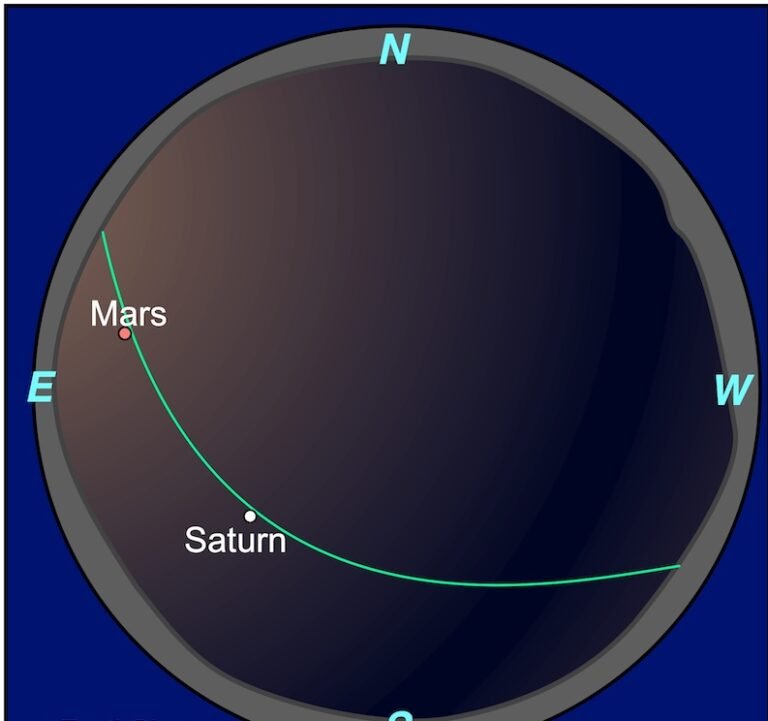
This all-sky chart shows Mars and Saturn – around the first week of July – in the east shortly before sunrise. Saturn is farther away, but it’s bigger; it’ll be the brighter of the 2 planets. Note that the planets lie along the ecliptic, the path the sun travels in the daytime (the green line on our chart). Chart via EarthSky.

As you step outside to enjoy the night sky, keep an eye out for several notable celestial bodies. The first week of July is particularly exciting as Mars and Saturn will be visible together in the eastern sky just before dawn. Saturn, known for its spectacular rings, will shine brightly and can be distinguished from Mars, which has a reddish hue. This week is a great opportunity for both novice and experienced stargazers to marvel at these planets' beauty.
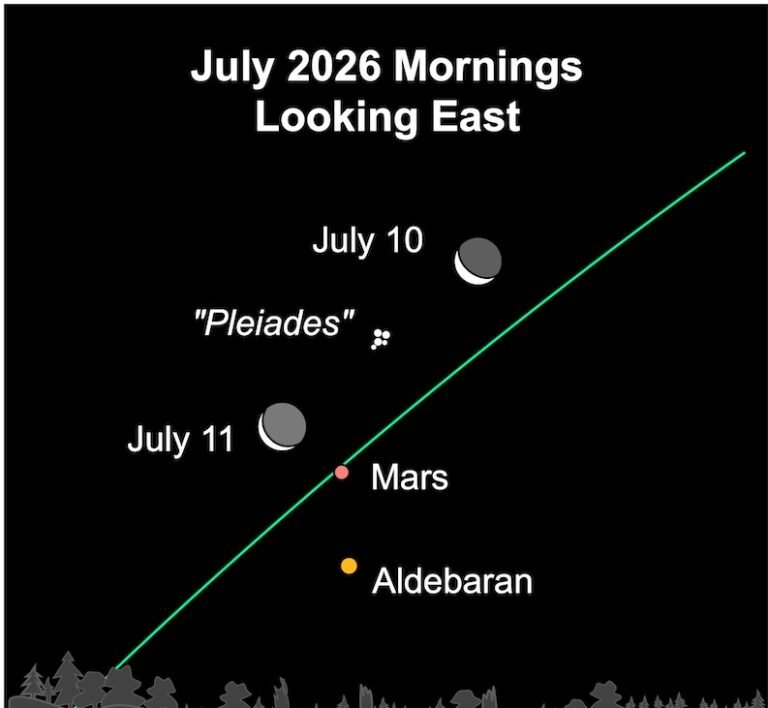
On July 10 and 11, the waning crescent moon will lie near reddish Mars and the ruddy star Aldebaran. Also, the delicate Pleiades star cluster will glitter nearby. Look for them about 90 minutes before sunrise. Chart via EarthSky.
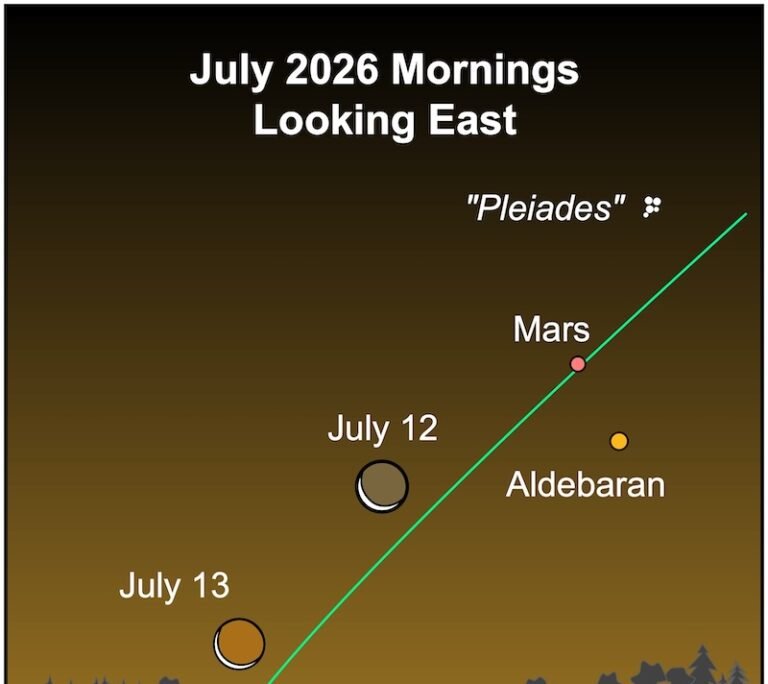
About 30 minutes before sunrise on July 12 and 13, look for the waning crescent moon, glowing with earthshine. It’ll lie near the red planet Mars and the bright orange giant star Aldebaran. Also, the tiny dipper-shaped Pleiades star cluster is nearby. Chart via EarthSky.

Moon Phases and Their Significance

Throughout July, the moon will transition through various phases, each offering a unique view. July 7 marks the third quarter moon, which will rise after midnight and be prominent in the pre-dawn sky. This phase provides a great opportunity for viewing as the moon will appear high before the sun rises. Then, on July 14, a new moon will occur, which is particularly interesting as it is the fourth of five consecutive supermoons. The new moon signifies a time when the moon is not visible, making it an ideal moment for stargazing, as the lack of moonlight allows fainter stars and celestial objects to shine through.
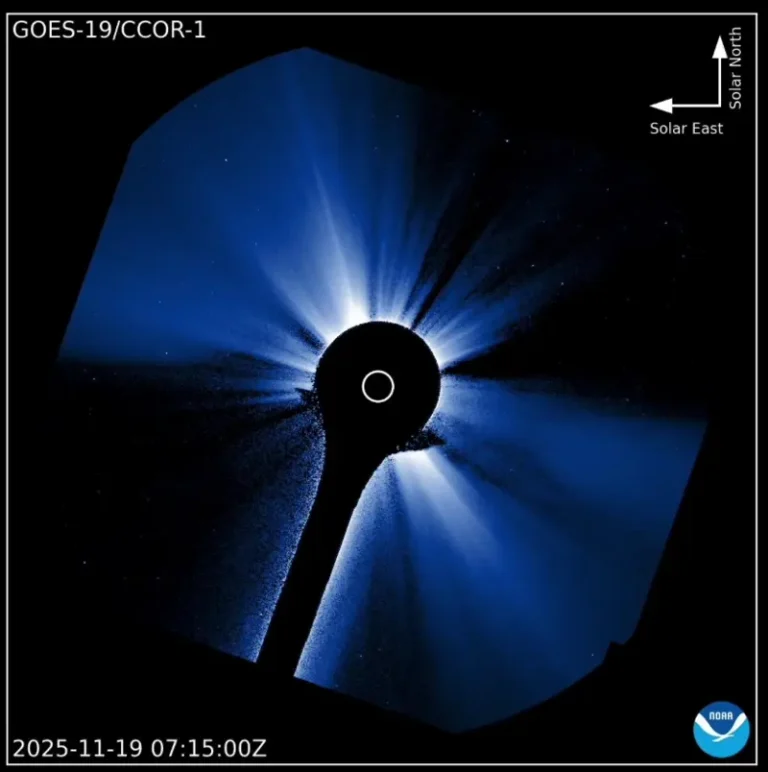
This GOES-19 CORR1 coronagraph from November 18-19, 2025 (designed to show coronal mass ejections from the sun), captured a fun view of the new moon, which would normally not be visible from Earth during this phase. The moment of new moon will fall at 9:44 UTC on July 14, 2026. That’s 4:44 a.m. Central Daylight Time in the Americas. And it’s 9:44 p.m. New Zealand Standard Time. In fact, this is the 4th of 5 new supermoons in a row. It’ll be 223,789 miles (360,154 km) away. Compare that with the average moon distance of 238,900 miles (384,472 km). New moons rise and set with the sun. Nights around the new moon are perfect for stargazing. See EarthSky’s best places to stargaze. Images via NOAA/ GOES.
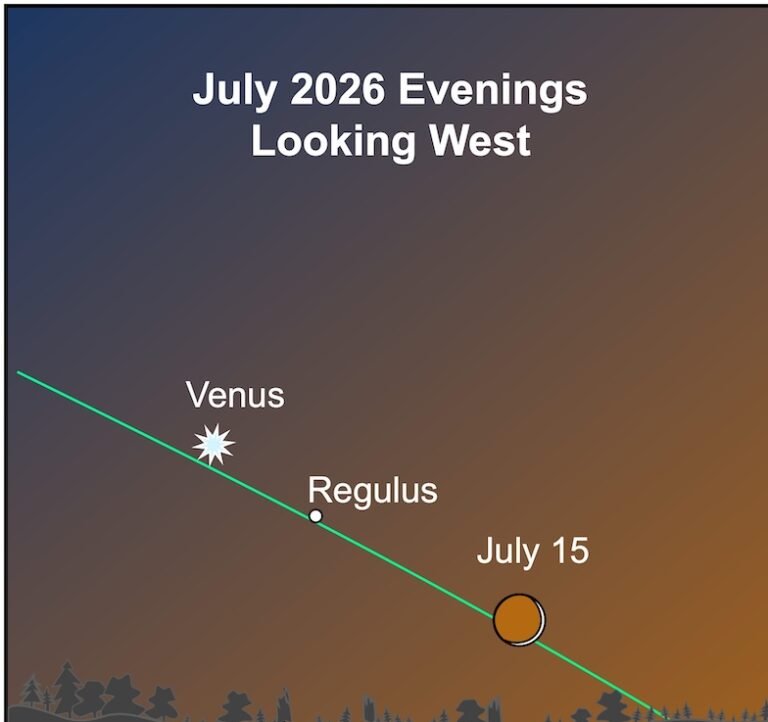
On the evening of July 15, the waxing crescent moon will be approaching brilliant Venus and Regulus, the brightest star in Leo the Lion. Chart via EarthSky.

Planets to Watch This Month

This month, keep an eye out for several prominent planets. Venus will be a standout, shining brightly in the evening sky alongside the waxing crescent moon on July 15. In addition, Regulus, the brightest star in the constellation Leo, will accompany both celestial bodies, creating a stunning trio that’s sure to catch your eye. As July progresses, Jupiter will become less visible in the evening sky, disappearing below the horizon early in the month. However, it will make a comeback in September, adding excitement to the fall stargazing season.
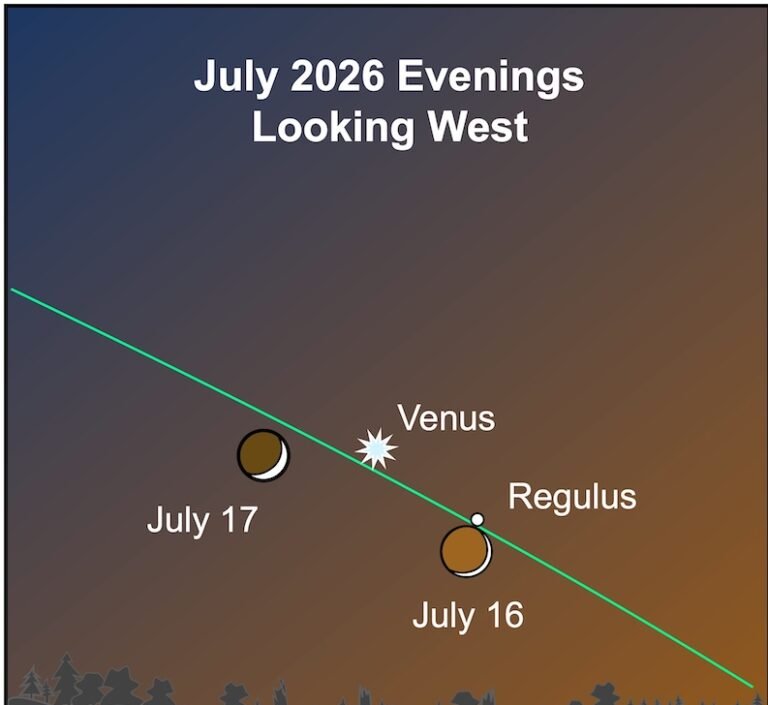
On the evenings of July 16 and 17, the waxing crescent moon will lie near brilliant Venus and Regulus, the brightest star in Leo the Lion. Regulus is the bright dot at the bottom of a backward question-mark pattern of stars known as the Sickle. Also look for the delicate glow of earthshine on the unlit portion of the moon. They’ll set late evening. Chart via EarthSky.
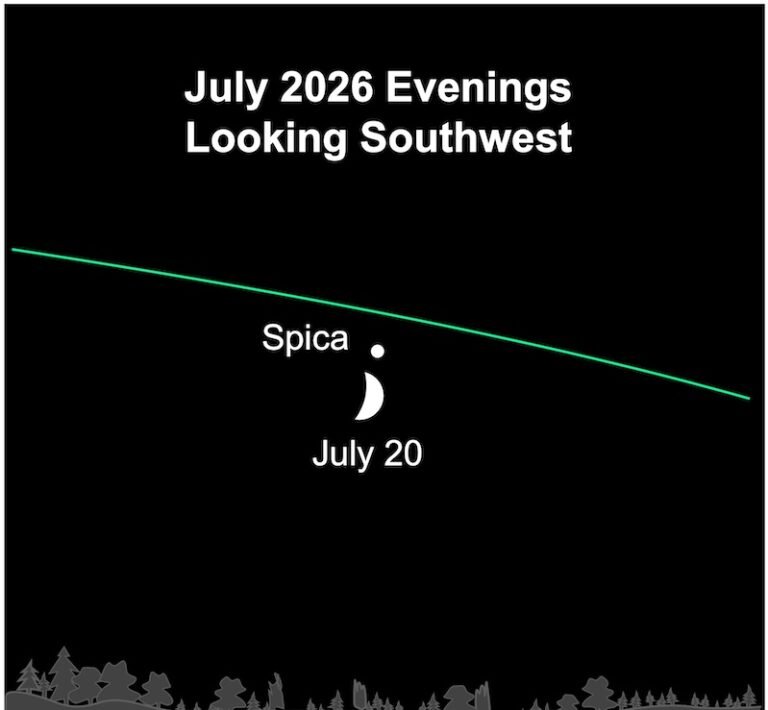
The almost first quarter moon will float close to the bright star Spica after twilight subsides in the evening of July 20. Spica is the brightest star in the constellation of Virgo the Maiden. Chart via EarthSky.

Final Tips for Stargazing

As you embark on your stargazing adventures this July, remember to find a dark location away from city lights for the best views. Bring along a planisphere or use apps like Stellarium to help identify stars and planets. Don't forget to capture your experiences, and feel free to share your photos in community forums. With so many celestial events to witness, July promises to be a memorable month for all astronomy enthusiasts!
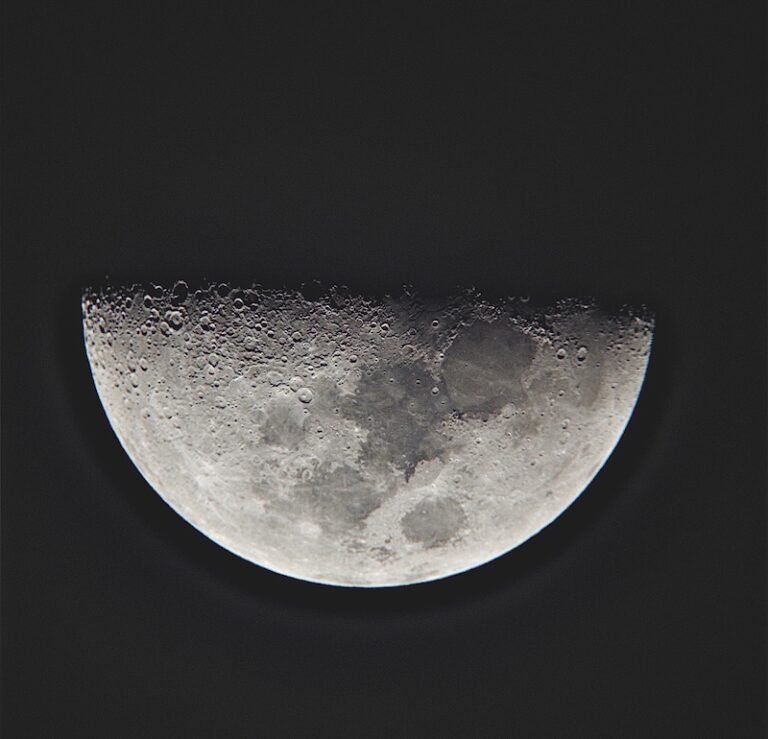
View at EarthSky Community Photos. | Amol Gaikaiwari took this picutre on May 23, 2026, in India and wrote: “The moon was in its first quarter phase. It was roughly 51% illuminated, with half of the lunar disk brightly lit against the night sky.” Thank you, Amol! This month’s moment of 1st quarter moon will fall at 11:06 UTC on July 21, 2026. That’s 5:06 a.m. Central Daylight Time in the Americas. And it’s 11:06 p.m. New Zealand Standard Time. A 1st quarter moon rises around noon your local time and sets around midnight. Watch for a 1st quarter moon high in the sky at sundown.
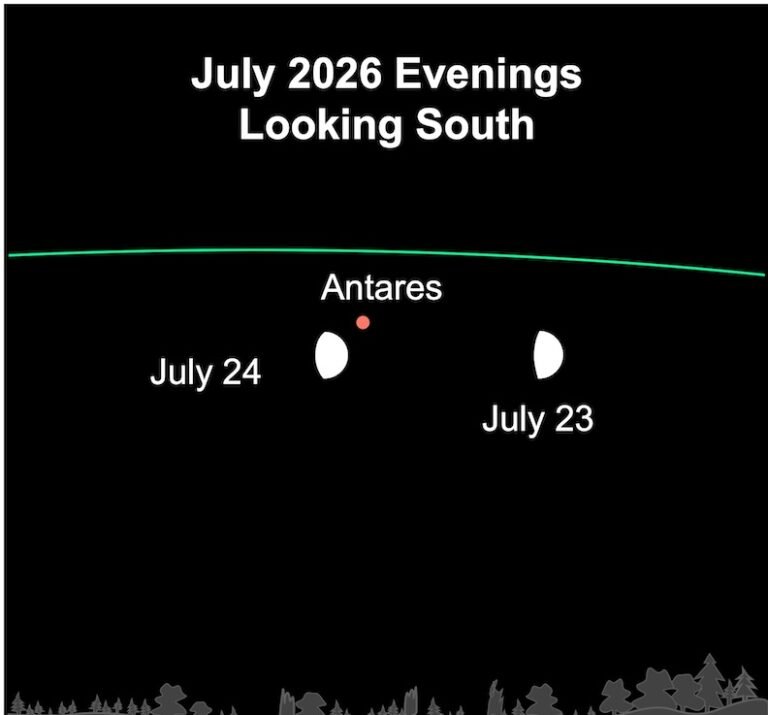
After sunset on July 23 and 24, the bright waxing gibbous moon will shine near Antares. Antares is the brightest star in Scorpius the Scorpion. Chart via EarthSky.
Scroll to Top