
A major challenge in establishing a permanent human presence on the Moon is finding a reliable way to generate and distribute electricity. Blue Origin is addressing this challenge with its new Power Tower, a 20-meter-tall solar energy system designed to provide more than 10 kilowatts of power for future lunar surface operations near the Moon’s south pole.
Unveiled in September 2026, the system features vertically deployed solar arrays that could help supply electricity to equipment operating across a future lunar base. The concept represents another step toward developing the infrastructure needed for long-term exploration of the Moon.
NASA
How Does Blue Origin’s Power Tower Work?
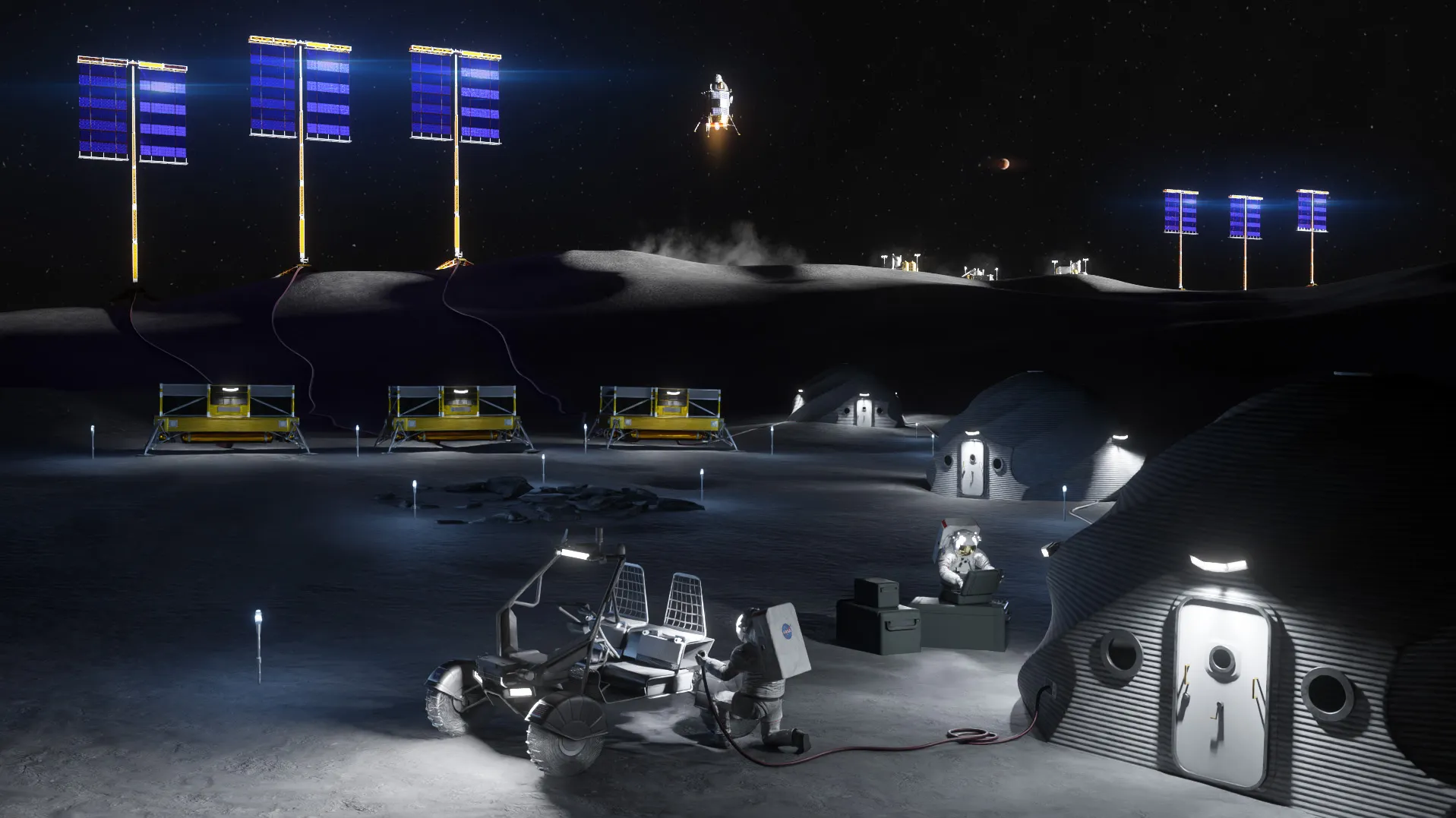
Unlike conventional solar panels positioned close to the ground, the Power Tower uses a tall central mast to elevate its solar arrays above the lunar surface. According to Blue Origin, the structure can extend vertically and unfold its panels after deployment.
The tower is designed to generate more than 10 kilowatts of electrical power. Its modular architecture could also allow multiple systems to work together, distributing electricity to equipment located beyond the immediate landing site.
This approach could support a range of lunar operations, including scientific instruments, robotic vehicles, communications equipment, and other infrastructure required by future astronauts.
Why Is Solar Power Important on the Moon?
Reliable electricity will be essential for sustained human and robotic exploration. Lunar missions need power for communications, scientific experiments, environmental monitoring, navigation, and life-support equipment.
The Moon’s south pole is particularly attractive for future exploration because some areas may offer access to sunlight for extended periods, while nearby permanently shadowed regions could contain water ice. However, the lighting conditions vary considerably across the terrain, and some locations experience long periods without direct sunlight.
A tall, vertically deployed solar array could help capture sunlight from suitable locations and provide power to nearby equipment. Energy storage and other power technologies would still be important to support operations when sunlight is unavailable.
A Real-World Deployment Test
Blue Origin released an animation showing how the Power Tower could land on the Moon and deploy its solar arrays. The company also shared footage of a successful deployment test conducted on Earth on July 22, 2026.
In the test, a central mast rises from its base before extending arms unfold the solar panels. This demonstration provides a look at the deployment mechanism intended to transform a compact structure into a much taller solar energy system.
However, the Earth-based test does not mean the complete system has already been deployed on the Moon. Operating in the lunar environment will require the technology to withstand extreme temperatures, abrasive lunar dust, and the challenges of deployment on uneven terrain.
How Does It Fit Into NASA’s Moon Base Plans?
NASA is developing technologies intended to support long-duration exploration and a sustained human presence on the Moon through its Artemis program. These efforts include power generation and storage, resource utilization, construction technologies, and systems designed to operate in the Moon’s harsh environment.
One related initiative is NASA’s Vertical Solar Array Technology (VSAT) project, which focuses on deployable solar arrays designed to provide reliable power for lunar surface missions. NASA describes systems using masts up to 20 meters tall as one potential approach to supplying electricity in challenging lunar locations.
Blue Origin’s Power Tower shares this broader goal of making dependable electrical power available across the lunar surface. Its development builds on related work involving Honeybee Robotics, a Blue Origin subsidiary that has contributed to lunar power technology research.
Although the concept aligns with the needs of NASA’s planned lunar infrastructure, the announcement alone does not establish that the Power Tower has been selected for deployment as part of a NASA Moon Base.
The Future of Lunar Energy
Building a sustainable presence on the Moon will require more than rockets and landers. Astronauts and robotic explorers will need dependable energy systems capable of supporting operations far from Earth.
Blue Origin’s Power Tower offers one possible solution by combining tall solar arrays with a modular design intended to extend power distribution beyond a lander. If successfully developed and deployed, systems like this could help support scientific research, robotic exploration, and future human activities on the lunar surface.
The technology remains part of a broader effort to develop the infrastructure needed for long-term lunar exploration. Its eventual contribution will depend on further testing, development, and successful operation in the lunar environment.
As humanity prepares for a longer stay on the Moon, could solar towers like this become the power stations of future lunar cities?
Sources and Further Reading
Article prepared by PaleBlueDotFacts using the linked reporting and NASA technology information.