
Astronomers are using the Hubble Space Telescope to investigate the origins of the Milky Way by studying one of its oldest star clusters, Messier 30.
ESA/Hubble & NASA, M. Libralato, G. Piotto, A. Sarajedini
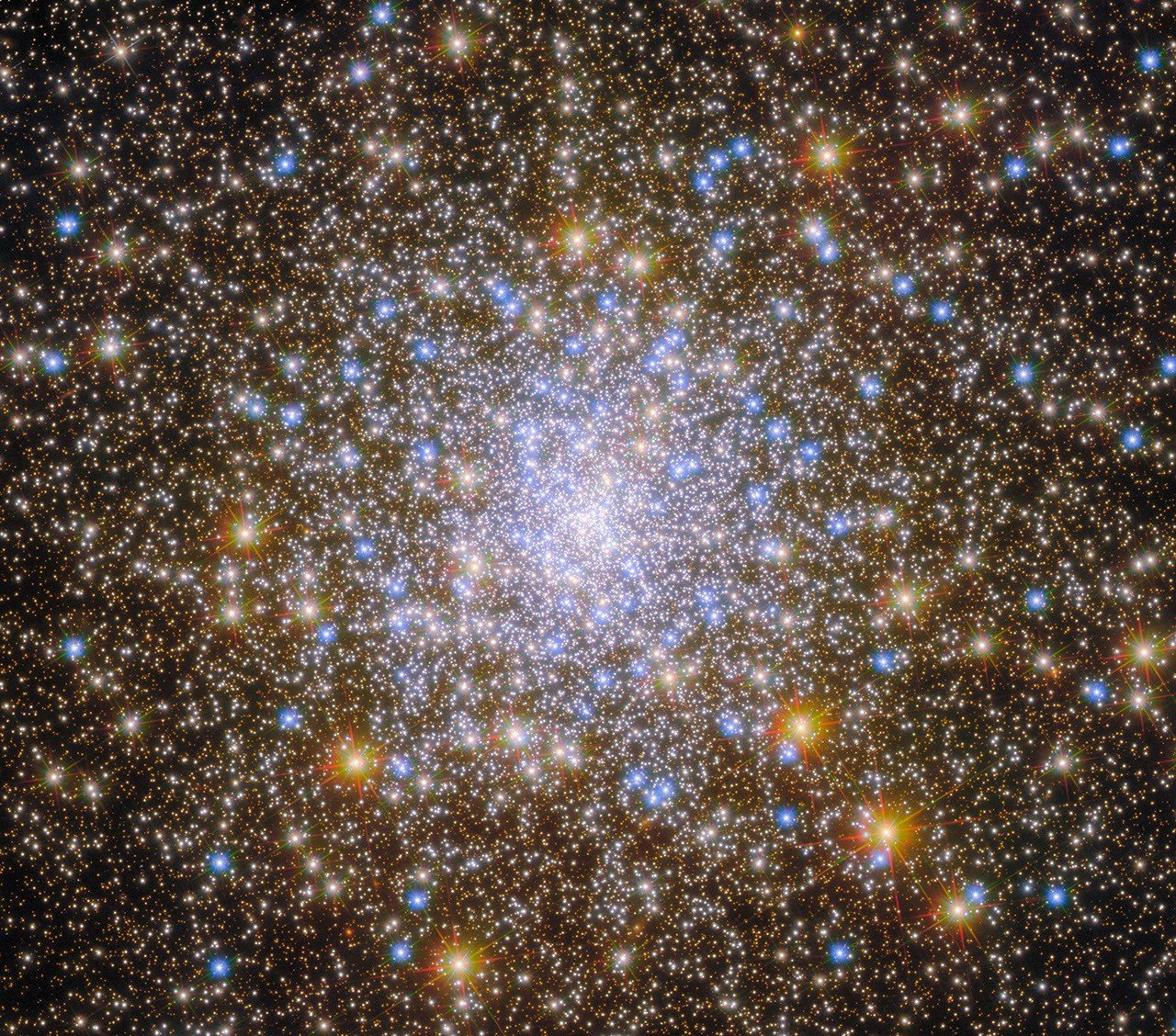
The NASA/ESA Hubble Space Telescope has captured a spectacular new view of Messier 30 (M30), a densely packed globular cluster located approximately 27,500 light-years from Earth in the constellation Capricornus.
Beyond its stunning appearance, this ancient collection of stars offers astronomers valuable clues about how our galaxy formed and evolved over billions of years.
A Cosmic Time Capsule
Messier 30 is a globular cluster, a roughly spherical collection of stars bound together by gravity. These clusters typically contain tens of thousands to millions of stars and are commonly found in the outer regions of galaxies.
M30 is estimated to be around 11.5 to 13.5 billion years old. Its stars formed during the early history of the universe, making the cluster a remarkable cosmic time capsule.
By studying the chemical composition and properties of these ancient stars, astronomers can investigate the conditions that existed when the Milky Way was still taking shape.
Clues to the Milky Way’s Origins
Globular clusters have played an important role in understanding the structure of our galaxy.
More than a century ago, astronomer Harlow Shapley used observations of variable stars within globular clusters to estimate their distances. His work helped demonstrate that the Sun is not located at the center of the Milky Way and that the galactic center lies in the direction of Sagittarius.
Today, astronomers are using these clusters to investigate an even deeper question: did every globular cluster in the Milky Way actually form within our galaxy?
Some clusters, including M30, orbit the galactic center in a direction opposite to the Milky Way’s overall rotation. This unusual motion suggests that they may have originated elsewhere and were later captured by our galaxy.
If confirmed, these findings would provide important evidence that the Milky Way grew over time by absorbing smaller galaxies and their star clusters.
Hubble’s Long-Term Observations Reveal Stellar Motion
Hubble has observed Messier 30 multiple times using different scientific instruments and filters.
Earlier observations captured stars in red and near-infrared light, while later observations used bluer wavelengths to investigate unusual stellar populations, including blue stragglers — stars that appear younger and hotter than many of their cluster companions.
More recent observations have also tracked how individual stars move over a period of approximately 15 years.
By combining these observations, astronomers can study the cluster’s stellar populations, identify unusual objects, and better understand how its stars formed and evolved.
Seeing the Universe in Multiple Wavelengths
The latest image combines observations from three Hubble observing programs, covering ultraviolet, visible, and near-infrared wavelengths.
Each wavelength reveals different information about the stars. Together, they provide a more complete picture of the cluster’s stellar diversity and history.
Hubble’s ability to resolve individual stars in such a crowded environment, combined with decades of observations, makes it an essential tool for reconstructing the history of our galaxy.
Looking Back at the Milky Way’s Past
Messier 30 is more than a beautiful collection of stars. It preserves evidence of the early universe and may hold clues to the ancient mergers that helped build the Milky Way.
As astronomers continue to study globular clusters with Hubble and other observatories, these stellar time capsules will help reveal how our galaxy grew into the vast cosmic structure we see today.
Source: NASA / ESA Hubble Space Telescope