
NASA’s Curiosity rover has captured beautiful views of high-altitude clouds drifting across the sky above Mars, offering scientists another opportunity to study the Red Planet’s changing atmosphere as a new Martian year begins.
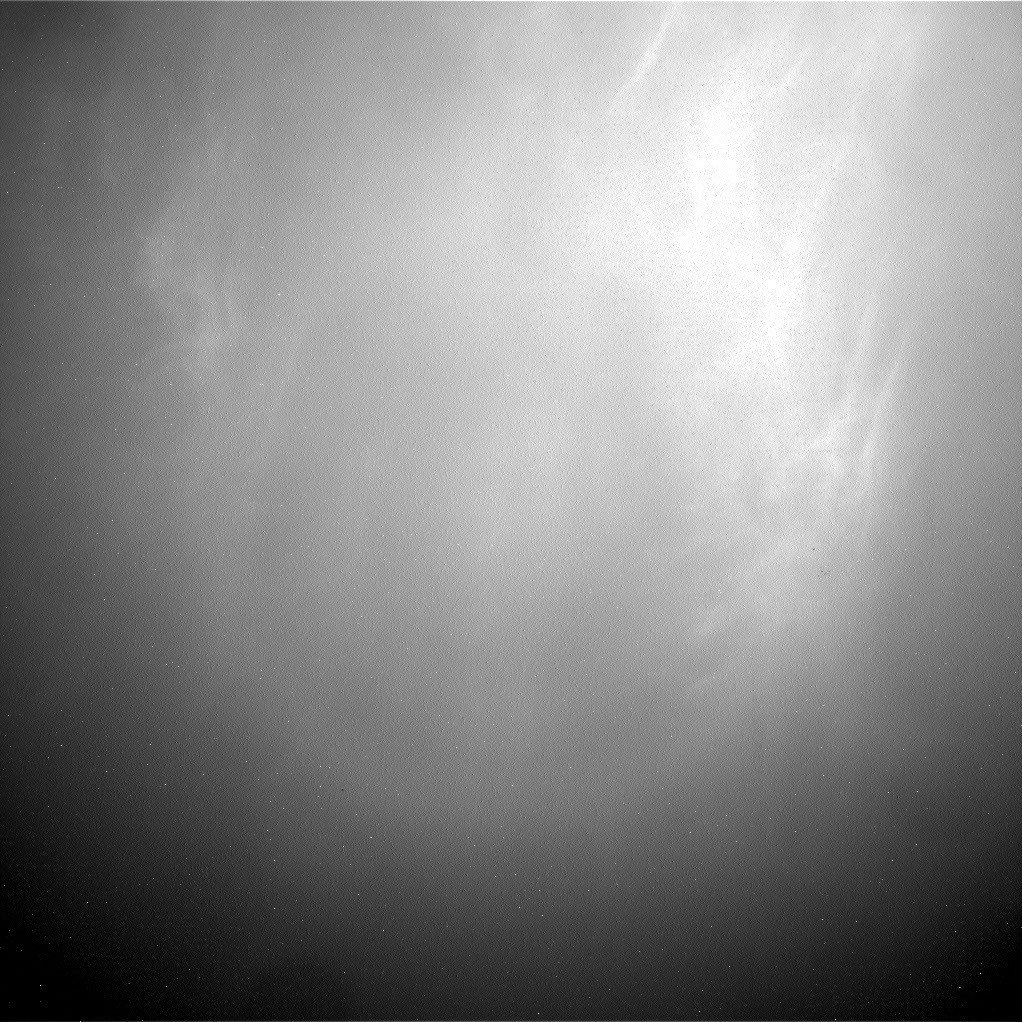
The observations, recorded in early October 2026, reveal delicate, wispy clouds illuminated by the setting Sun above Gale Crater. These clouds mark the seasonal return of a familiar atmospheric phenomenon that scientists look forward to observing during the Martian autumn.
NASA/JPL-Caltech
A New Martian Year Begins
Mars recently entered its 39th year, according to the planetary calendar used by scientists. A Martian year begins with the northern hemisphere’s spring equinox, when the Sun crosses the planet’s equator heading north.
The beginning of Mars Year 39 also marks autumn in Gale Crater, located just south of the Martian equator. As the seasons change, the atmosphere undergoes shifts that influence cloud formation, temperature, and atmospheric circulation.
For scientists working with the Curiosity mission, these seasonal changes provide valuable opportunities to investigate how the Martian atmosphere behaves throughout the year.
Curiosity Captures Clouds at Sunset
On October 7, 2026, during its 5,037th Martian day, or sol, NASA’s Curiosity rover captured an image of high-altitude clouds while looking almost directly overhead.
The image was taken using the rover’s Right Navigation Camera shortly before sunset at approximately 19:44 UTC. The clouds appeared as thin, wispy formations against the Martian sky above Gale Crater.
As autumn progresses, these twilight clouds are expected to become more noticeable. The low angle of the setting Sun illuminates the high-altitude formations, making them bright enough for Curiosity’s cameras to detect.
Many clouds in the Martian atmosphere are extremely faint and difficult to see, even with the rover’s imaging equipment. Scientists describe these as suboptical clouds because they are too thin to be readily visible in ordinary images.
The brighter twilight clouds, however, provide a clearer opportunity to observe atmospheric activity and monitor how conditions change with the seasons.
Why Scientists Study Martian Clouds
Clouds are more than just striking features in the Martian sky. They help scientists understand the planet’s atmosphere, including how water moves through it and how weather conditions change over time.
On Mars, water ice can form clouds when water vapor cools and condenses in the atmosphere. Depending on their altitude and the surrounding conditions, Martian clouds can have different compositions and appearances.
By observing clouds over extended periods, researchers can investigate seasonal patterns, atmospheric circulation, and the processes that transport water through the planet’s thin atmosphere.
Cloud movements can also help scientists estimate wind direction and speed. Comparing observations taken from different perspectives or at different times can provide additional information about cloud altitude and atmospheric behavior.
These studies contribute to a broader understanding of Mars’ present-day climate and help researchers investigate how the planet has changed throughout its history.
Continuing the Exploration at Gale Crater
While Curiosity was watching the clouds, the rover’s science team was also completing work at a location known as “Basque Lakes.”
The team continued analyzing material collected during a drilling campaign, including rock and mineral fragments left behind after drilling. Scientists also planned additional laboratory experiments using the rover’s onboard Sample Analysis at Mars (SAM) instrument, alongside remote observations from its Mastcam and ChemCam instruments.
The team planned to finish its activities at Basque Lakes before driving toward the “Chiu Chiu” region, where researchers had previously identified interesting crystal-like formations.
This combination of geological investigations and atmospheric observations demonstrates the versatility of the Curiosity mission. The rover can study the rocks beneath its wheels while also looking upward to investigate the atmosphere above it.
A Changing Planet Still Full of Discoveries
Since landing on Mars in August 2012, Curiosity has helped scientists reconstruct the history of Gale Crater and investigate whether ancient Mars once offered conditions suitable for microbial life.
Its continuing observations also reveal that the Red Planet remains an active environment, with seasonal clouds, shifting weather patterns, and ongoing changes in its landscape.
As Mars Year 39 unfolds, scientists will continue monitoring the returning twilight clouds and studying what they reveal about the planet’s atmosphere.
For Curiosity, even a quiet moment spent watching clouds drift across the sky can become a valuable scientific observation, helping researchers build a clearer picture of our planetary neighbor.
Source: NASA Science — Curiosity Blog, Sols 5036–5042: Watching the Clouds Go By.
Original NASA article: https://science.nasa.gov/blog/curiosity-blog-sols-5036-5042-watching-the-clouds-go-by/
Image credit: NASA/JPL-Caltech