
The Moon may look unchanged from Earth, but its surface is constantly being altered by impacts from objects traveling through space. NASA’s Lunar Reconnaissance Orbiter has now captured evidence of one of the most significant lunar impacts observed in recent decades — a collision powerful enough to create a crater hundreds of feet wide.
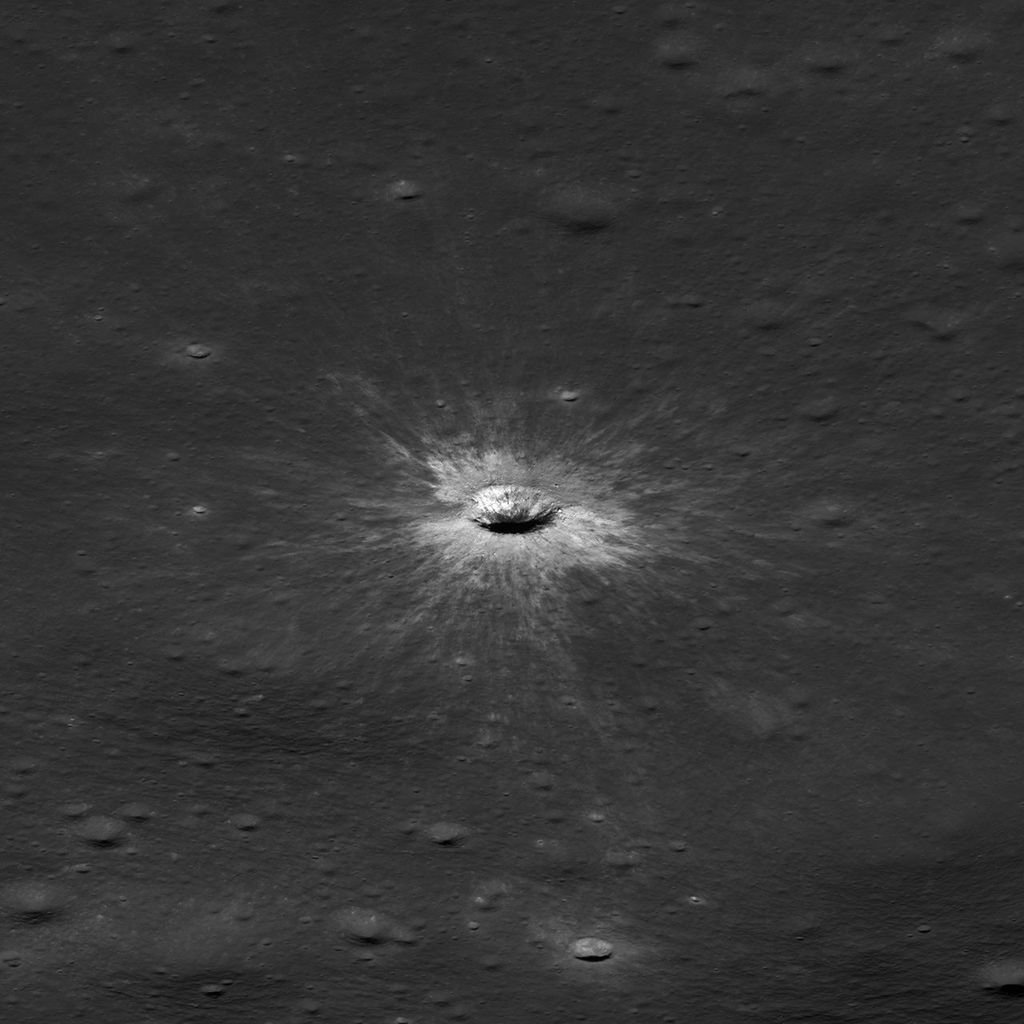
The newly discovered crater, officially named McGetchin crater, formed sometime between April 11 and May 22, 2024. Scientists estimate that an asteroid or comet fragment roughly the size of a three- to six-story building slammed into the Moon, creating a crater about 728 feet (222 meters) wide and 141 feet (43 meters) deep.
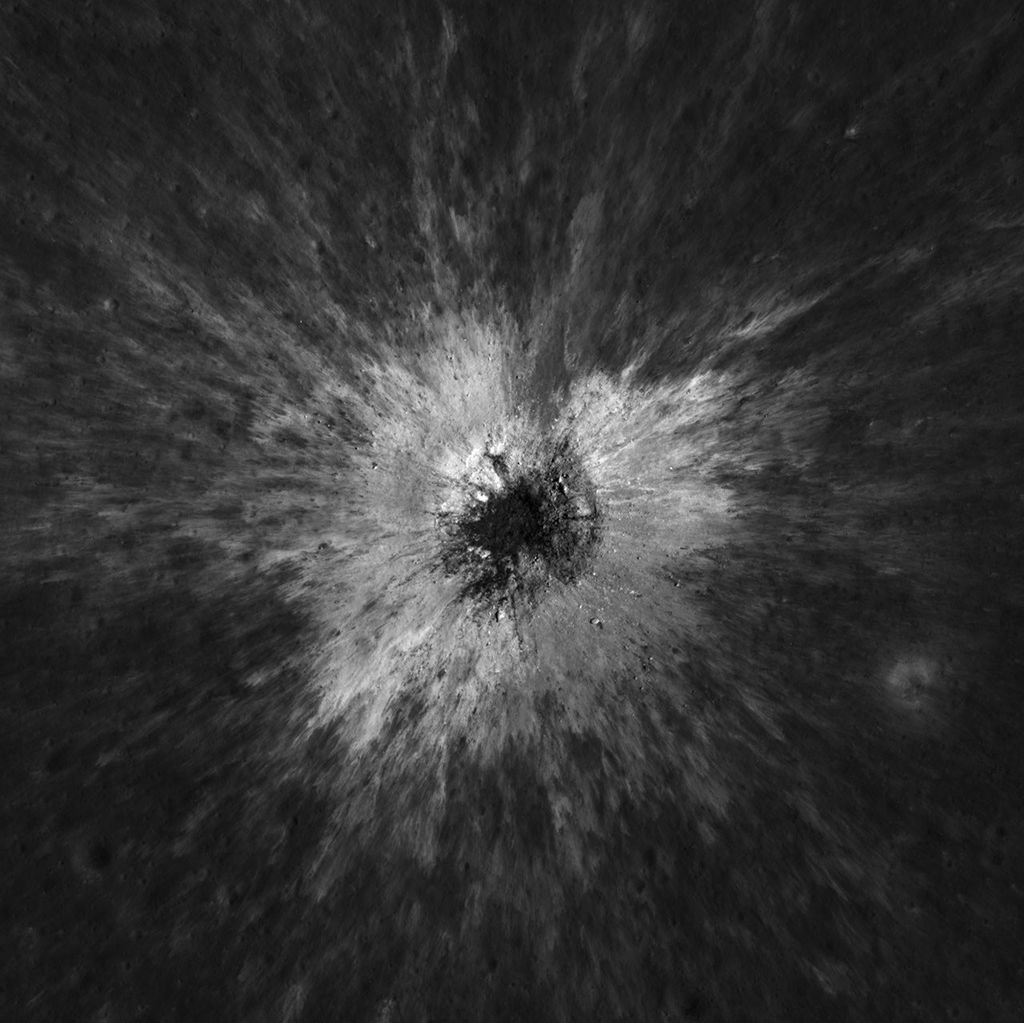
Scientists estimate that an impact of this scale may occur on the Moon only about once every century or even less frequently.
A surprising discovery hidden in lunar images
The discovery began with what seemed like a routine check of NASA’s lunar imagery.
On October 24, 2025, Robert Wagner, an image-processing specialist working with data from NASA’s Lunar Reconnaissance Orbiter Camera, was examining a detailed map of the Moon. He noticed an unusually bright area surrounded by a darker halo.
The strange pattern suggested that lunar material had recently been disturbed.
Wagner compared images of the same region taken at different times. The earlier images showed no obvious feature, while later observations revealed a large disturbance. The difference indicated that something had struck the Moon between the two observations.
Further observations confirmed that the bright region was debris thrown outward from a newly formed impact crater.
Meet McGetchin crater
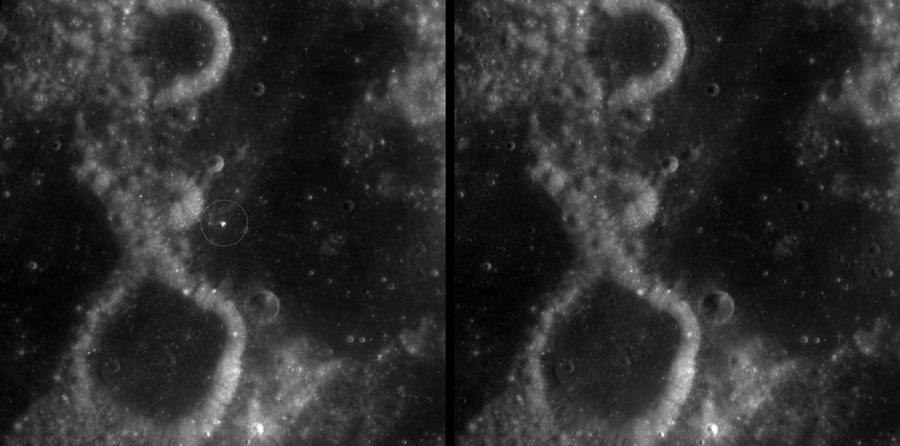
NASA Goddard/Intuitive Machines/Robert Wagner
The new crater was named McGetchin in honor of pioneering lunar scientist Tom McGetchin.
The impact occurred along the eastern edge of the Moon. Based on the crater’s size and surrounding debris, researchers estimate that the incoming object could have been several stories tall.
The resulting crater is approximately 728 feet across — roughly the length of two football fields — and reaches about 141 feet deep.
The event is particularly valuable to planetary scientists because the crater is young enough for researchers to study the immediate effects of a major lunar impact.
NASA’s Lunar Reconnaissance Orbiter made the discovery possible
NASA’s Lunar Reconnaissance Orbiter (LRO) has been studying the Moon since 2009. During more than 17 years in lunar orbit, the spacecraft has mapped the surface in extraordinary detail while investigating its topography, composition, temperature, and radiation environment.
LRO’s long-term observations are especially useful for finding new impact craters.
By comparing images of the same locations taken years apart, scientists can identify changes that would otherwise be almost impossible to notice.
NASA says LRO’s observations have revealed at least 1,000 new impact craters over the course of the mission, along with roughly 100,000 other surface changes associated with impacts and ejecta.
From a wide view to a close-up
The initial discovery came from LRO’s Wide-Angle Camera, which can survey enormous areas of the lunar surface. However, the camera’s broad images have pixels roughly comparable to the size of American football fields.
Scientists then turned to LRO’s much sharper Narrow-Angle Camera.
The Narrow-Angle Camera can capture images at approximately 3 feet per pixel, allowing researchers to examine the newly formed crater in much greater detail. Observations made in December 2025 and March 2026 revealed the crater’s shape, dimensions, ejecta pattern, and effects on the surrounding terrain.
The images provided scientists with an unusually detailed look at the aftermath of a major lunar collision.
The Moon takes impacts differently from Earth
Unlike Earth, the Moon has virtually no atmosphere to slow down or burn up incoming space rocks.
As a result, asteroids and smaller objects can strike the lunar surface at extremely high speeds.
Most impacts are far smaller than the one that created McGetchin crater. NASA notes that LRO can distinguish craters as small as roughly 30 feet across. Impacts capable of producing craters of that size are estimated to occur around 140 times per year across the Moon.
Much smaller objects strike the Moon even more frequently, but their craters are too tiny to identify in orbital photographs.
The impact created a huge “cold spot”
The crater itself isn’t the only interesting feature.
Scientists also used the Lunar Reconnaissance Orbiter’s Diviner thermal instrument to study the region after the impact.
They discovered that the lunar surface surrounding McGetchin crater contains a cold area extending roughly 4 miles (6.4 kilometers) around the crater. At night, this region is about 16 degrees Fahrenheit (9 degrees Celsius) cooler than nearby terrain.
The reason is connected to the lunar soil, known as regolith.
The impact disturbed and loosened the regolith, making it less dense. Because the newly disturbed material does not retain heat as efficiently, it cools more rapidly after sunset.
This shows that a major impact can change the physical properties of the Moon’s surface far beyond the crater itself.
Why this discovery matters
McGetchin crater gives scientists a rare opportunity to study a very recent lunar impact while its effects are still relatively fresh.
Understanding how impacts modify the Moon’s surface can help researchers better estimate the current impact rate across the lunar environment. It can also provide information useful for future robotic and human missions.
Changes in the texture and density of lunar soil could affect how spacecraft, landers, and rover wheels interact with the surface.
The discovery also demonstrates the scientific value of maintaining long-term observations of the Moon. A single image might reveal a crater, but decades of observations allow scientists to determine when it formed and how the surrounding landscape changed afterward.
A reminder that the Moon is still changing
The Moon may appear frozen in time, but its surface continues to evolve.
Every day, countless tiny particles and larger objects travel through space, and some eventually collide with the lunar surface. Most impacts leave marks too small to see from orbit, while rare events such as the formation of McGetchin crater produce changes that can remain detectable for years.
Thanks to NASA’s Lunar Reconnaissance Orbiter and its long-running collection of lunar observations, scientists can now watch these changes unfold.
McGetchin crater is more than a new hole on the Moon. It is a natural experiment — one that gives researchers a fresh opportunity to understand how impacts shape the lunar surface and what future explorers may encounter there.
Source
This article is based on NASA’s report published September 16, 2026, and accompanying research reported in Science Advances.
Source: NASA Science — NASA’s Moon Orbiter Spots New, ‘Once-in-Century’ Moon Crater