
Venus may look like a quiet, cloud-covered world from afar, but beneath its thick atmosphere, the planet could still be geologically active.
A new study published in Nature Geoscience has found evidence that some of Venus’ enormous rift valleys may have formed much more recently than scientists previously thought — and some could even still be active today.
The finding adds to growing evidence that Earth’s closest planetary neighbour is not the geologically dead world scientists once imagined.
Giant valleys stretching across Venus
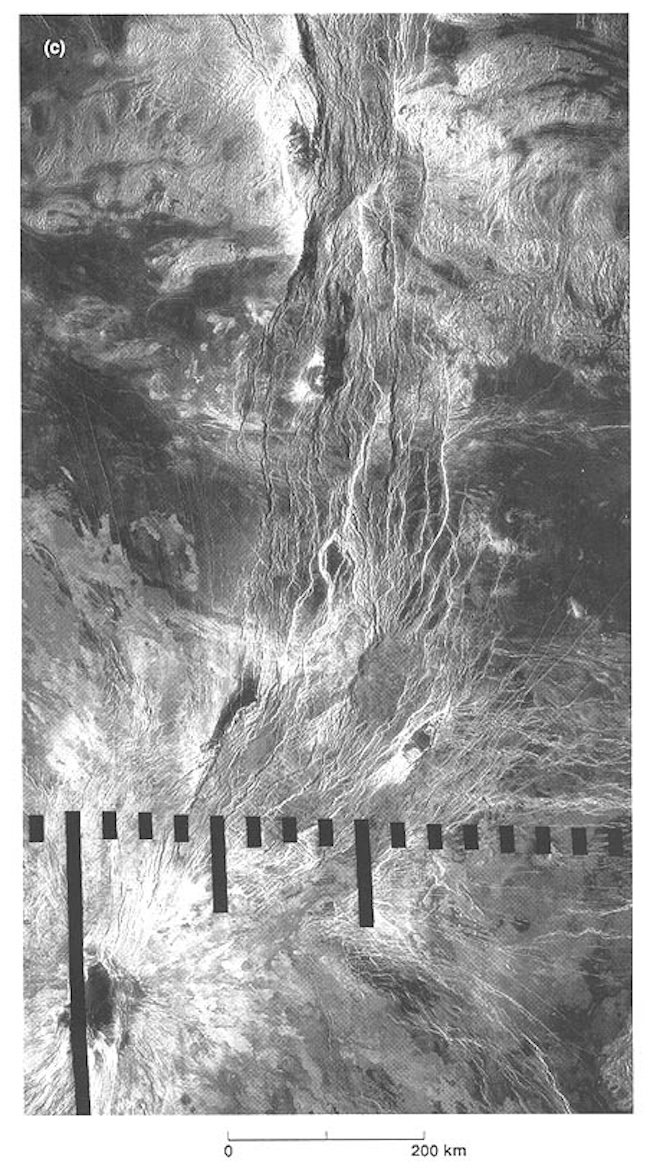
Venus is covered by a remarkable variety of geological features, including enormous volcanic plains, mountains, fractures and long, deep valleys known as rifts.
These rift systems form where the planet’s crust is pulled apart. As the crust stretches, faults develop and sections of the surface sink, creating long depressions with steep sides.
On Earth, similar processes occur in places such as the East African Rift, where the continent is gradually being pulled apart.
Venus, however, does not have Earth-like global plate tectonics. That makes its enormous rift systems particularly interesting.
Venusian rifts collectively extend for roughly 40,000 kilometres and cover around 8% of the planet’s surface. Many are also associated with volcanic regions and other signs of activity deep within the planet.
A new way to identify active rifts
Researchers from ETH Zurich, led by Xi Yang, created detailed three-dimensional computer simulations of how rifts form and evolve under the extreme conditions found on Venus.
Earlier models of Venusian rifting were often simpler and largely two-dimensional. The new simulations allowed the researchers to examine the three-dimensional shape of the valleys and, importantly, what happens to them after the tectonic activity stops.
The models revealed an important clue.
Young and active rifts tend to have broad, elevated regions along both sides of the valley. These are known as rift flank uplifts.
Over time, however, those elevated flanks gradually become lower and flatter as the crust relaxes.
That means the shape of a rift can provide a kind of geological clock.
If a Venusian rift still has broad, elevated flanks, it may be relatively young — or it may still be undergoing tectonic activity.
Three giant rifts stand out
The researchers compared their simulations with the actual topography of several major rift systems on Venus.
Three areas were particularly interesting:
Ganis Chasma
Dali Chasma
Devana Chasma
All three have unusually broad rift flank uplifts that resemble the structures produced by the researchers’ models of active rifting.
The results suggest that these regions may still be active today or may have remained active within the past few tens of millions of years.
That is surprisingly recent on a planetary timescale.
The models also indicate that some of these rifts could have been widening at rates of approximately 3 to 10 centimetres per year.
For comparison, that is comparable to relatively fast continental rifting processes on Earth.
What could be driving the movement?
One possible explanation involves the planet’s interior.
Scientists believe that hot material can rise from deep within Venus’ mantle in enormous columns known as mantle plumes.
As these plumes rise, they can heat and weaken the overlying lithosphere. The resulting forces may help stretch the crust and create large rift systems.
Several Venusian rifts are associated with enormous volcanic and tectonic regions, supporting the idea that processes deep inside the planet may be driving activity at the surface.
The new modelling suggests that vigorous mantle activity could help explain the relatively high extension rates inferred for some of the rifts.
Venus may not be a dead world after all
For decades, Venus was often described as a planet that had largely stopped evolving geologically.
But that picture has been changing.
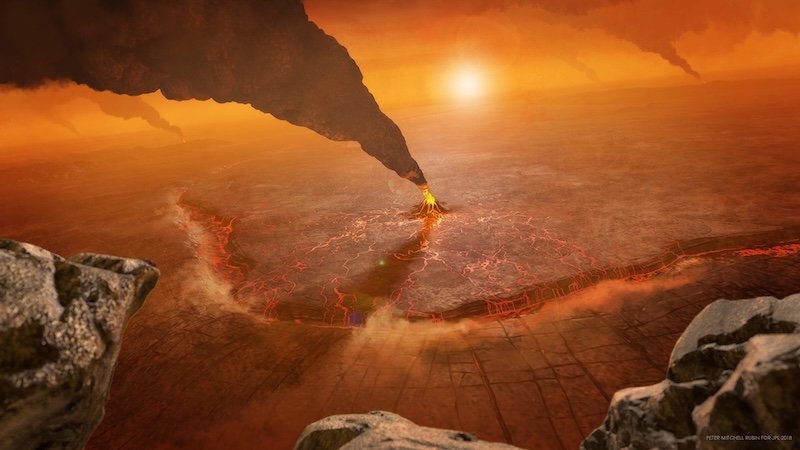
Scientists have found increasing evidence suggesting that Venus may still have active volcanoes. Re-analysis of data from NASA’s Magellan spacecraft has revealed signs consistent with relatively recent volcanic activity, while other studies have identified additional geological features that may have formed through ongoing internal processes.
The new rift study strengthens that emerging picture.
Rather than being ancient scars left behind by a long-dead planet, some of Venus’ enormous valleys may represent geological processes that continued into the relatively recent past — and possibly continue today.
Importantly, the study does not directly observe a Venusian rift moving today. Instead, scientists infer recent or ongoing activity from the distinctive shape of the rift valleys and their elevated flanks.
Future missions could put the idea to the test
The possibility of active geology makes Venus an even more compelling target for future exploration.
Several missions planned for the coming years could provide new observations of the planet’s surface, atmosphere and interior.
The European Space Agency’s EnVision mission and NASA’s VERITAS mission are expected to dramatically improve our understanding of Venus’ surface and geological history. NASA’s DAVINCI mission is also planned to study the atmosphere and descend through the clouds toward the surface.
Other missions from India and private-sector teams could add further observations.
These spacecraft may eventually allow scientists to determine whether Venus is genuinely tectonically active today — and perhaps identify exactly where its interior is still reshaping the surface.
A changing view of Earth’s sister planet
Venus is often called Earth’s sister planet because of its similar size and rocky composition.
But the two worlds evolved very differently.
Earth developed a global system of moving tectonic plates, while Venus appears to operate through a very different style of planetary geology.
Understanding why these two similar worlds followed such different paths could tell scientists much more than just how Venus works. It could also help explain why Earth remained habitable while Venus became a scorching world with surface temperatures hot enough to melt lead.
The giant rift valleys of Venus may therefore be more than spectacular geological features.
They could be windows into the planet’s still-active interior — and clues to one of the biggest questions in planetary science:
Is Venus still alive beneath its clouds?
The latest evidence suggests the answer may be yes