
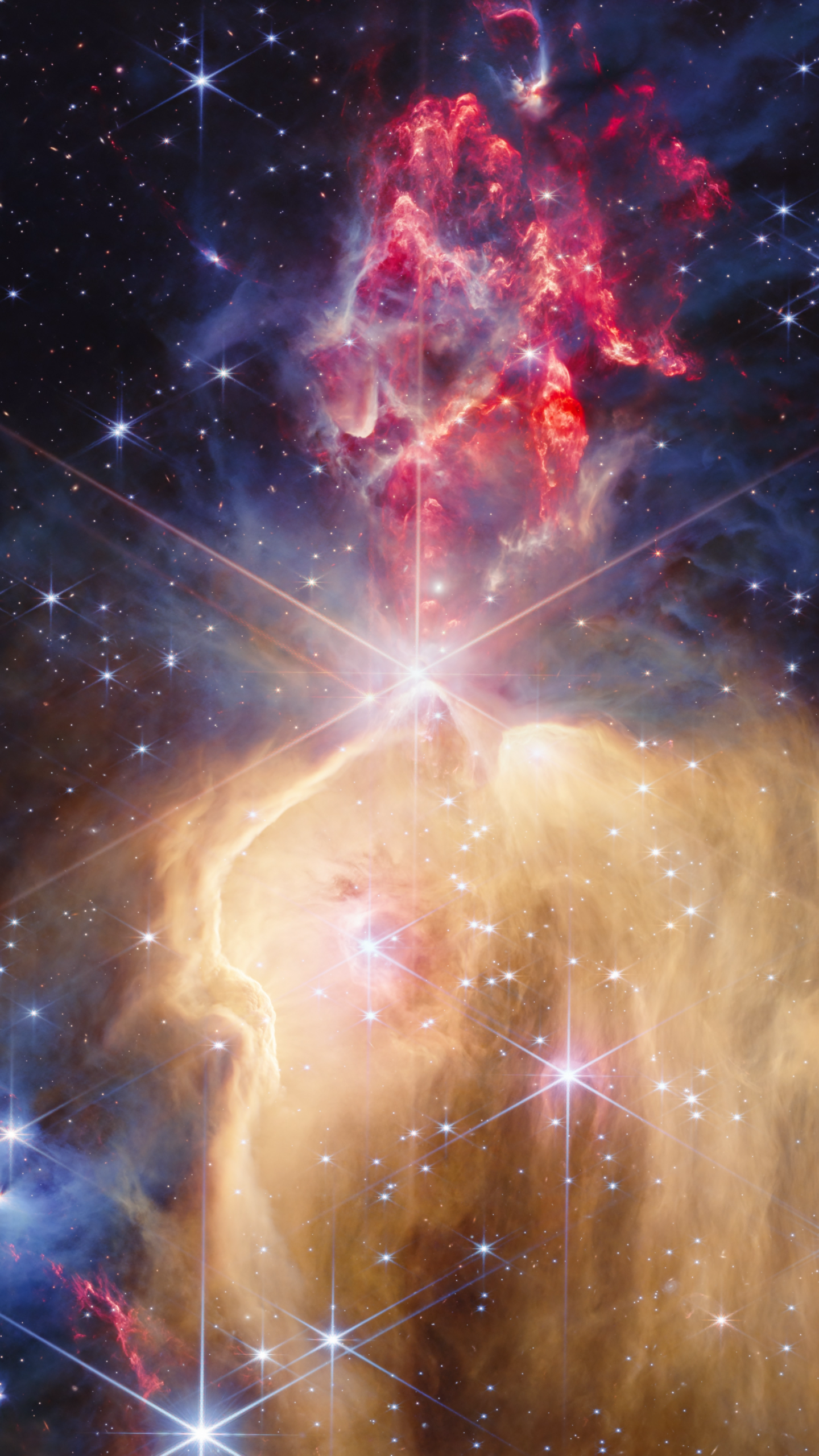
Deep within a vast cloud of cosmic gas and dust, new stars are beginning to emerge. The NASA/ESA/CSA James Webb Space Telescope has captured a stunning infrared view of NGC 7129, a stellar nursery where young stars illuminate their surroundings and shape the environment in which future generations of stars may form.
The remarkable view reveals a colorful landscape of glowing gas, dark dust clouds, and developing stars, offering astronomers a closer look at the complex processes that drive stellar birth.
A Cosmic Nursery Filled With Young Stars
NGC 7129 is a reflection nebula in the constellation Cepheus, a region of space associated with the formation of young stars. Unlike nebulae that glow primarily because of their own ionized gas, reflection nebulae shine when nearby stars illuminate surrounding dust, scattering their light into space.
Within NGC 7129, numerous protostars and young stellar objects occupy a rich environment of gas and dust. These objects represent different stages in the early lives of stars, from developing protostars still gathering material to young stars that are already influencing their surroundings.
The region provides astronomers with a natural laboratory for investigating how stars form and how their activity transforms the clouds from which they emerge.
How Webb Sees Through Cosmic Dust
One of the most remarkable features of Webb’s observations is its ability to detect infrared light. Dense clouds of cosmic dust can scatter or absorb much of the visible light coming from objects hidden within them. Infrared wavelengths can penetrate some of this material more effectively, allowing Webb to reveal structures that might otherwise remain difficult to observe.
Using its Near-Infrared Camera (NIRCam), Webb captures intricate details of the nebula’s dusty environment and the young stellar objects embedded within it. The resulting view transforms the region into a vivid scene of glowing structures and shadowy clouds.
These observations help scientists investigate the relationship between newly forming stars and the material surrounding them.
How Young Stars Transform Their Environment
Stars do not simply form quietly inside clouds of gas and dust. As they develop, young stellar objects can release powerful outflows of material and radiation that interact with the surrounding cloud.
These processes can carve cavities into dense material, compress nearby gas, and disperse parts of the cloud. Depending on local conditions, this activity may influence whether additional stars can form in the surrounding region.
In a stellar nursery such as NGC 7129, studying these interactions helps astronomers understand how stars influence their birth environments and how stellar nurseries evolve over time.
Webb’s detailed infrared observations provide an opportunity to investigate these processes on scales and with a level of detail that are difficult to achieve using visible-light observations alone.
A Glimpse Into the Early Lives of Stars
The beauty of NGC 7129 is more than a spectacular cosmic display. It represents an active stage in the life cycle of stars, when clouds of gas and dust gradually give rise to new stellar systems.
By examining young stars alongside the material around them, astronomers can investigate how stars develop, how their environments change, and how the raw ingredients for future planetary systems are assembled.
Although Webb cannot show every detail of how a star or planet forms in a single image, its infrared observations provide valuable clues about the conditions in which these processes begin.
Exploring NGC 7129 With the James Webb Space Telescope
ESA/Webb has released both a panning video and a zoom video featuring NGC 7129. Together, these views guide viewers across the nebula and into its intricate structures, highlighting the colorful stellar nursery revealed by Webb’s observations.
The videos offer a striking reminder that the universe is constantly changing. Inside clouds that may appear still from a distance, young stars are developing and reshaping the cosmic material around them.
NGC 7129 is a window into these early stages of stellar evolution. By studying regions like this, astronomers can better understand how stars are born and how their activity helps shape the structure of our galaxy.
Every glowing cloud and dark pocket of dust tells part of a much larger story: the continuing process through which the universe builds new stars and, eventually, the planetary systems that may surround them.