
NASA’s Nancy Grace Roman Space Telescope has reached another important milestone on its journey toward exploring the universe. Engineers have confirmed that all of the ground stations supporting the mission are ready to receive Roman’s enormous volume of scientific data once its science operations begin, currently expected by early 2027.
Located about one million miles (1.5 million kilometers) from Earth, Roman will survey huge areas of the sky to investigate some of the biggest questions in modern astronomy, including the nature of dark matter and dark energy, the evolution of galaxies, and the discovery of planets beyond our solar system.
But collecting observations in space is only part of the challenge. Roman also needs to send that information back to Earth—and it is designed to do so at an extraordinary rate.
NASA
A Telescope Built to Send Back Massive Amounts of Data
Roman is expected to transmit approximately 1.4 terabytes of data every day once it enters science operations. NASA says this will be the highest daily data rate of any NASA astrophysics mission so far.
The spacecraft can transmit scientific information at rates reaching 500 megabits per second, depending on its position relative to Earth and the conditions of its communication link.
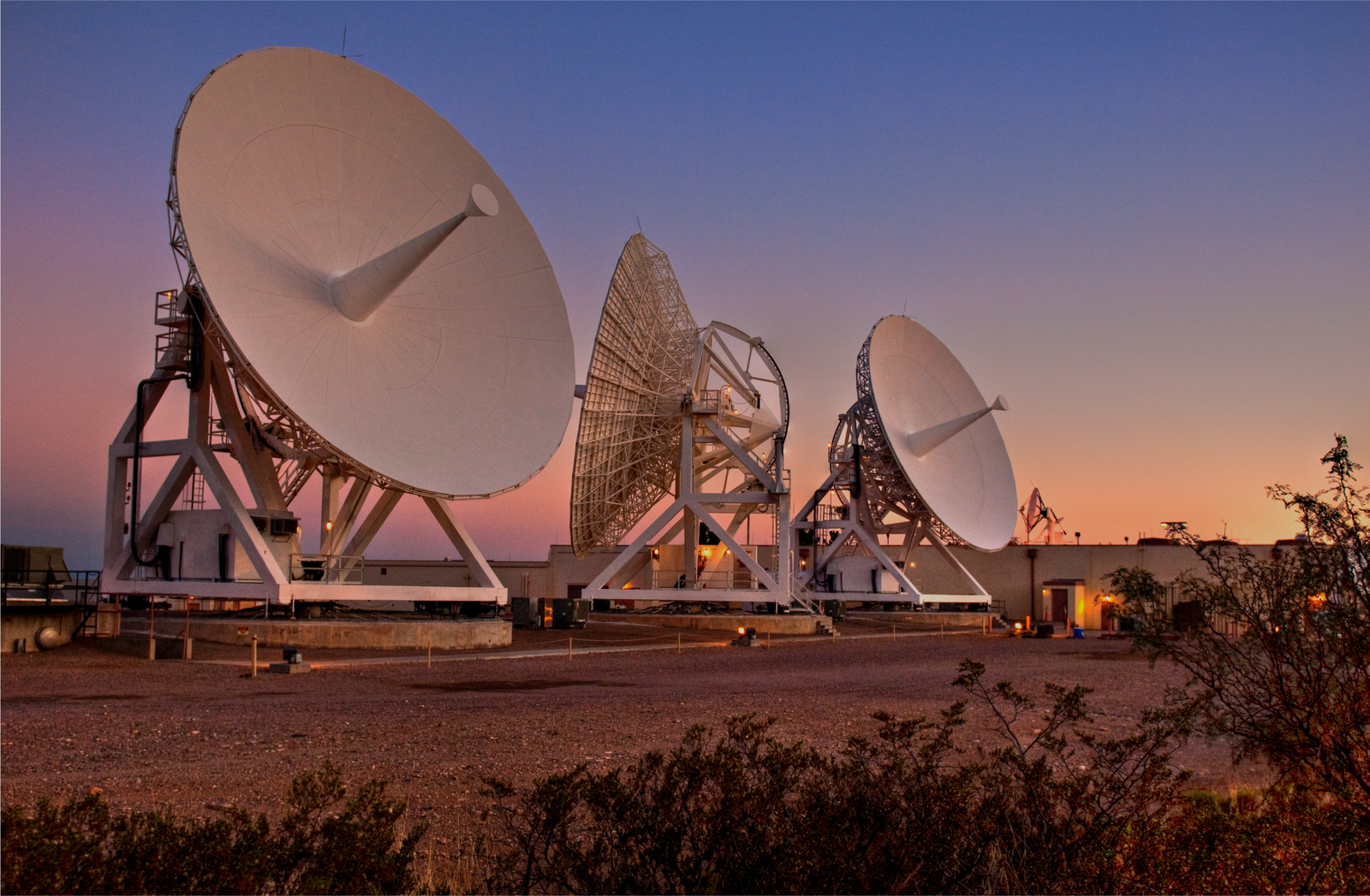
To handle this enormous flow of information, NASA is working with international partners to create a global network of receiving stations.
The network includes NASA’s Near Space Network facilities in New Mexico, antennas operated by the European Space Agency (ESA) in Australia, and Japan’s JAXA ground station.
Testing the Stations From Japan to Australia
The latest testing began on September 7, when NASA engineers used JAXA’s Misasa Deep Space Station in Saku City, Japan.
The team successfully tested the antenna and confirmed that it could receive Roman’s data at rates of up to 500 megabits per second for most of the year. The exact communication rate will change as Roman moves around the Sun-Earth Lagrange Point 2 (L2) and its distance and elevation relative to Earth vary.
The test also presented an unexpected challenge: a typhoon was affecting Japan at the time.
Despite the difficult weather conditions, engineers successfully completed the high-rate data transmission test.
Rain can be particularly challenging for spacecraft communications because raindrops can scatter or weaken radio signals at the wavelengths used by Roman. This is one reason the mission relies on ground stations in several different geographic locations.
Why Roman Needs Ground Stations Around the World
Roman’s science observations will generate far more information than a single ground station could reliably handle.
The mission therefore uses geographically separated stations. If bad weather interferes with communication at one location, another station can potentially provide the required connection.
The system is also designed to recover data if a transmission is interrupted.
Roman will store information onboard its solid-state recorder, allowing the spacecraft to retransmit data that did not successfully reach Earth.
This gives the mission an additional layer of protection against temporary communication problems.
NASA’s New Mexico Stations Pass Their Tests
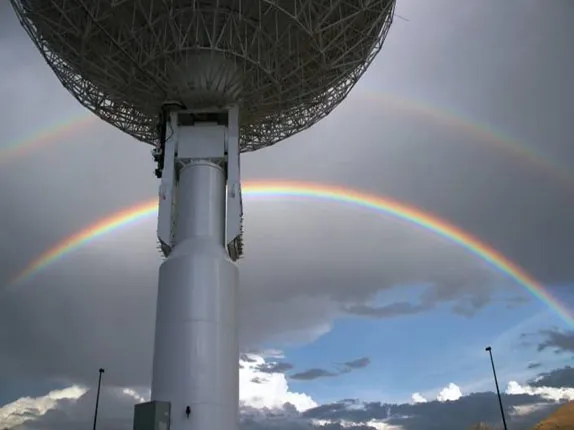
After completing the tests in Japan, engineers moved to NASA’s Near Space Network station and its backup antenna at the White Sands Complex in New Mexico.
Testing took place from September 8 through September 11.
Both antennas successfully demonstrated their ability to receive Roman’s data at the rates tested by the mission team.
These stations will play an important role in transferring Roman’s scientific observations from deep space to researchers on Earth.
NASA
ESA’s Australian Station Completes the Final Test
The final major test took place on September 17 at an ESA ground station near New Norcia, Western Australia.
Engineers tested several different data rates, including Roman’s highest transmission rate.
The station successfully received the data, completing another major step toward preparing the mission for full science operations.
A Global Team Supporting Roman
Although Roman is a NASA mission, bringing its data back to Earth is an international effort.
NASA’s Near Space Network ground station in New Mexico works together with antennas operated by ESA in Australia and JAXA in Japan to receive Roman’s science data.
NASA’s Deep Space Network, managed by NASA’s Jet Propulsion Laboratory in Southern California, will also provide important support. Its stations in California, Spain, and Australia will supply tracking information, spacecraft telemetry, and commands.
Together, these systems form the communications infrastructure that will allow scientists to access Roman’s observations from millions of miles away.
Preparing for Roman’s Scientific Mission
The recent tests used real spacecraft information, beginning with so-called housekeeping data. This includes information about the spacecraft and instruments, such as temperatures, power consumption, and preliminary image data.
Successfully receiving this information at Roman’s planned transmission rates gives engineers confidence that the communications system is ready for the much larger volumes of science data that will arrive once the telescope begins its major survey work.
Roman’s ability to rapidly survey enormous portions of the sky is expected to provide astronomers with an unprecedented amount of information about the universe.
The telescope will investigate dark energy and dark matter, search for exoplanets, study galaxies, and explore objects throughout our cosmic neighborhood and far beyond.
With all of its primary ground stations now confirmed to be receiving data successfully, NASA has completed another crucial step toward that scientific future.
The Nancy Grace Roman Space Telescope is getting closer to the moment when its massive cosmic survey can truly begin.
Source: NASA — Nancy Grace Roman Space Telescope